The city
The forint: why Hungary is not on the euro, and what that means for you
Tony Denesa – Travel Advisor8 min read
Hungary is in the European Union and is not in the euro. It uses the forint — HUF, written *Ft* — and has no target date for changing that.
For a visitor the practical consequence is a currency where a coffee costs 1,500, a dinner 12,000 and a taxi across town 6,000. The numbers are large, none of them are round in euros, and the arithmetic never quite settles. The converter on the homepage exists for exactly that reason.
The worst hyperinflation ever recorded
The forint's origin is the most extreme monetary event in history, and it is worth two paragraphs because it explains the national attitude to money.
Hungary's currency before 1946 was the pengő. In the aftermath of the Second World War it collapsed — not in the way the German mark had in 1923, but far worse. At the peak, prices were doubling roughly every fifteen hours. The government issued a note for one hundred million *b.-pengő*, which written out is a 1 followed by twenty digits, and it remains the highest-denomination banknote ever put into circulation anywhere.
The forint replaced it on 1 August 1946 at a conversion rate of 400,000 quadrillion pengő to one forint. It held its value afterwards, and the date is still remembered.
Why not the euro
Hungary committed to eventual adoption when it joined the EU in 2004 and has not moved on it. The stated reasons are economic — convergence criteria, the cost of giving up an independent monetary policy — and the political reasons are not stated but are not obscure either.
The practical upshot is stable: nobody expects the forint to disappear soon, and euros are not generally accepted. Some hotels and tourist-facing businesses quote in euros and will take them, at a rate that is always worse than the bank's. Pay in forints.
The four rules
1. Always decline dynamic currency conversion. When a card terminal or an ATM offers to charge you in your home currency instead of forints, say no. That conversion is performed by the machine's operator at a rate they choose, and it is consistently the worst rate available. Choosing HUF lets your own bank convert, which is nearly always better. This single decision costs more visitors more money in Budapest than anything else on this page.
2. Use bank ATMs, not the standalone ones in tourist streets. The independent machines around Váci utca and the Castle District charge substantial fees and offer poor rates. Machines attached to actual banks — OTP, K&H, Erste, Raiffeisen — are the ones to use.
3. Avoid the exchange offices immediately around the sights, and be alert to the ones advertising a headline rate that turns out to apply only above a threshold, or to have a commission that is disclosed after the transaction. Reputable offices in the inner streets of District V and District VI are fine and are usually better than an ATM.
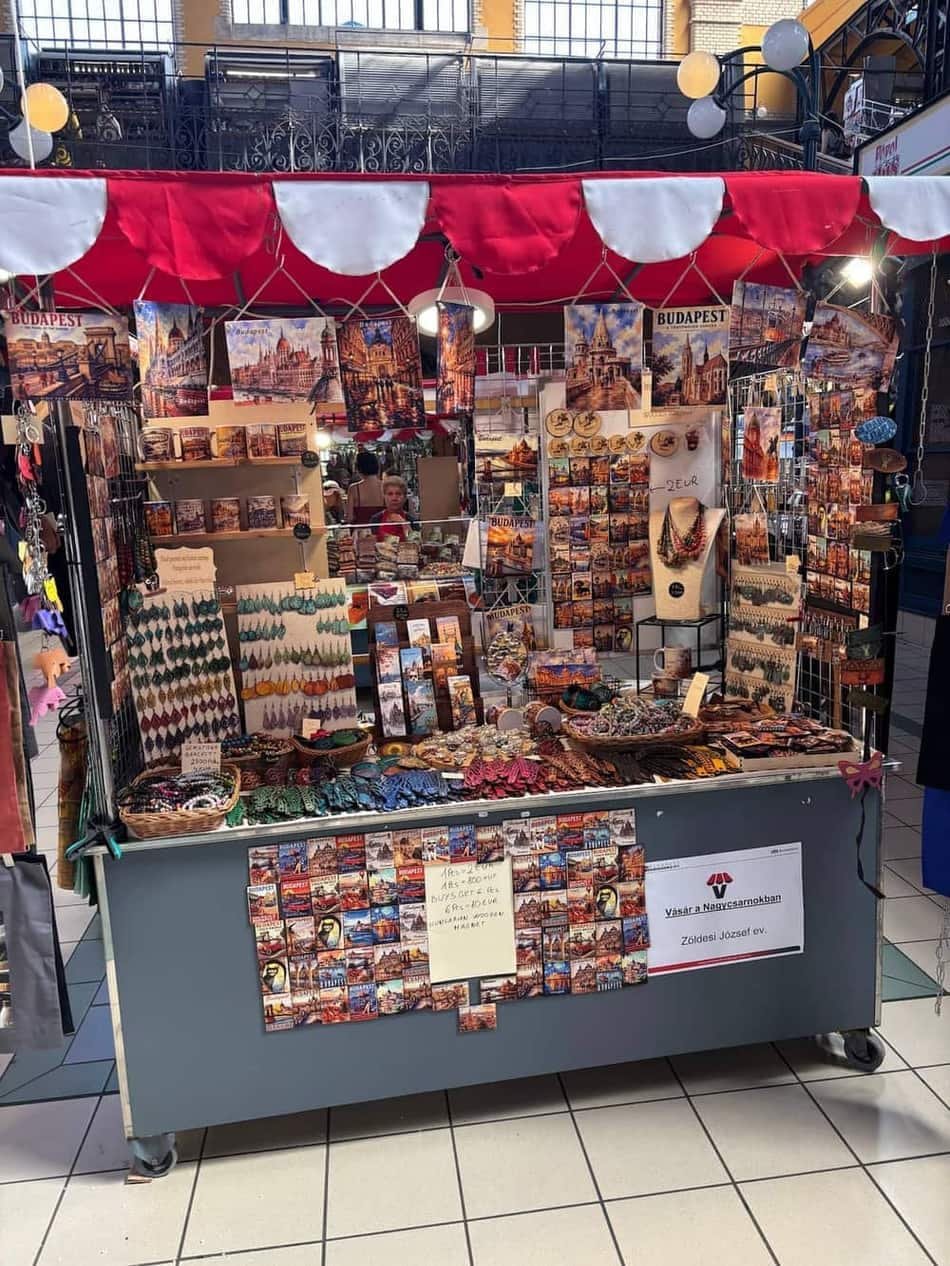
4. Card is accepted almost everywhere. Budapest is a card city — restaurants, cafés, shops, taxis, transport ticket machines. Carry some cash for markets, small bakeries, thermal bath lockers, tips and the occasional stubborn place, but do not take out large amounts.
Notes and coins
Notes: 500, 1,000, 2,000, 5,000, 10,000 and 20,000 Ft. Coins: 5, 10, 20, 50, 100 and 200 Ft.
The 1 and 2 forint coins were withdrawn in 2008, so cash totals are rounded to the nearest 5 at the till. This is normal and is not somebody short-changing you.
The 20,000 note is worth roughly the price of a decent dinner for two, and small shops will occasionally struggle to change it.
Tipping, which is a real question here
Service is often, but not always, included. Look for *szervízdíj* or a service line on the bill.
If it is not included, 10 to 15 per cent is the convention in a restaurant. The specific local practice is that you tell the server the total you want to pay when handing over card or cash, rather than leaving money on the table — leaving cash and walking out is read as slightly odd rather than generous.
Round up for taxis. Bath and cloakroom attendants are tipped small amounts.
What things actually cost
Two kinds of number get quoted about Budapest and they are not equally reliable, so this site separates them.
Published tariffs come from the operator and can be checked in one click:
- Single transport ticket: 500 Ft — BKK fares, checked August 2026. Note that it is *not* valid on the 100E airport bus, which needs its own ticket.
- Széchenyi Baths weekend day ticket: around 12,000 Ft — Széchenyi price list, checked August 2026. Bath prices across the city rose by roughly 5 per cent on 7 January 2026, so any figure published before that date is low.
Observed prices are menu prices we sampled, not tariffs anybody publishes. They are ranges, they move, and they are labelled as such — sampled August 2026:
- Coffee in a speciality bar: ~1,000–1,700 Ft
- Lángos at a market stall: ~1,500–2,200 Ft
- Beer in a ruin bar: ~1,800–2,800 Ft
- Main course at an ordinary restaurant off the main streets: ~3,500–6,000 Ft
The live version of this table, converted into your own currency at the day's ECB rate, is on the homepage. The budget guide goes further into what a day actually costs.
Budapest is no longer the bargain it was fifteen years ago. It remains clearly cheaper than Vienna or Munich, and the gap is widest on food and drink and narrowest on hotels in District V in high season.
One thing that is genuinely cheap
Public transport. A single ticket costs less than a coffee, and a travelcard covering everything — metro, tram, bus, the cogwheel railway — is among the best-value city transport passes in Europe. Details on the getting around page.
Where to stay nearby
Live prices and availability on a map centred on this exact spot — hotels, apartments and hostels, so you can judge the walk from here rather than guess from an address.
Bookings made through this map earn us a commission. Your price is unaffected.