
Guides
Budapest bath etiquette: what to bring, what to wear and what not to do
Tony Denesa – Travel Advisor8 min read
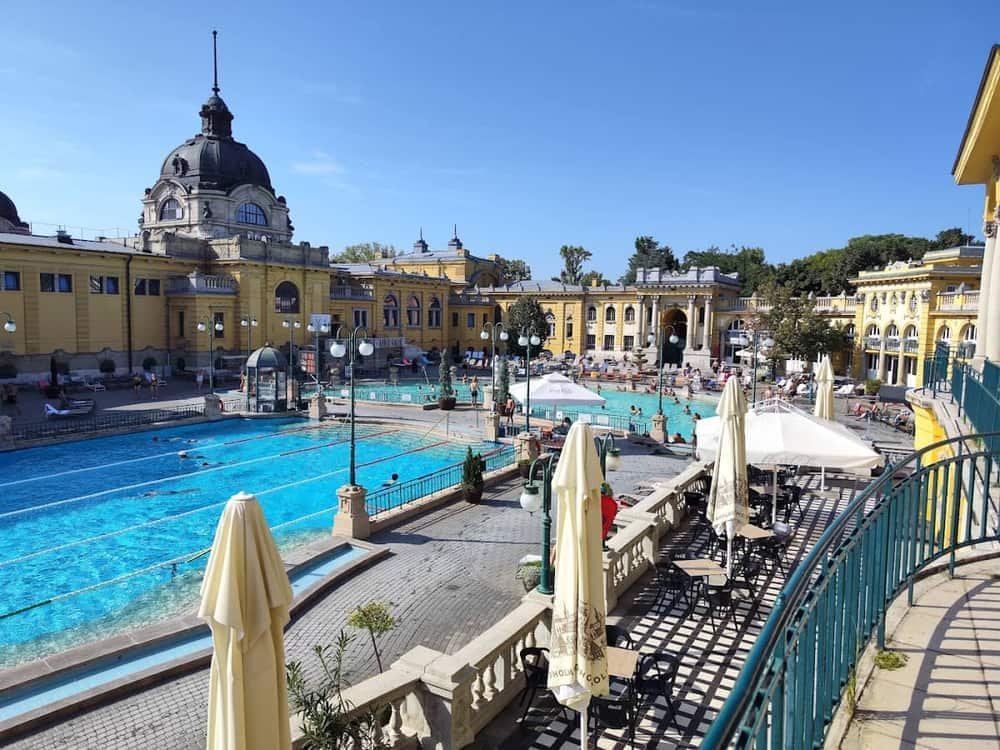
A Budapest thermal bath is not a swimming pool and not a spa, and the first twenty minutes are confusing for almost everyone: the entry system is unusual, the building is deliberately maze-like, and nobody explains any of it at the door.
Here is what you need to know before you walk in.
What to bring
- Swimsuit. Compulsory in every mixed area. Trunks or shorts for men — some baths refuse loose board shorts, so ordinary swimming trunks are the safe choice.
- Flip-flops. The floors are wet stone and tile. This is the item people forget and regret within ninety seconds.
- Towel. Rentable at the bath for a deposit, and much cheaper bought from any shop beforehand.
- Swimming cap if you intend to use the lap pool. Not needed in the thermal pools.
- A plastic bag for the wet swimsuit afterwards.
You do not need a padlock — the lockers work on a wristband — and you do not need cash, because cards work throughout.
How the entry system works
You buy a ticket, and you are given a wristband with a chip. That band is your locker key, your re-entry pass and, at some baths, your tab.
Find your locker or cabin, and remember the number — the bands open the door but do not tell you which one is yours, and the changing areas are large and identical. Photograph the number. Everyone who does not, regrets it.
The band is waterproof and stays on you the entire time.
At the exit, you touch out. If you overstayed a time-limited ticket, the difference is charged there.
The unwritten rules
Shower before you get in. This is expected rather than posted, and it is the one thing that will get you a look.
The thermal pools are for sitting still. They are 36–40°C medicinal water, people are there to soak and talk quietly, and swimming lengths through them is the clearest possible sign of a visitor. Swim in the swimming pool.
Keep your voice down in the indoor thermal halls. The outdoor courtyard at Széchenyi is louder and that is fine; the indoor sections are not.
Do not photograph people. Phones are tolerated at the outdoor pools and are unwelcome indoors. Several baths ban them in the changing areas outright.
Do not bring alcohol in, and do not use the baths after drinking. The water is hot enough that this is a genuine safety rule rather than a moral one.
Time in the water
The thermal pools are medicinal water and are not meant to be endured.
Twenty minutes at 38°C is a session. Get out, cool down, sit, go back. Locals cycle between hot, cold and rest, and the cold plunge is not a dare — it is the point of the sequence.
If you feel light-headed, get out immediately and sit with your feet down. This happens to people who treat a 40°C pool as a place to spend an hour.
Do not drink the water. Some baths have a separate drinking-cure tap; the pools are not it.
Nudity and single-sex days
Almost all Budapest baths are mixed and swimsuit-compulsory, all week. That is the default and it covers Széchenyi, Gellért and the strand baths.
The saunas are the exception in some baths, where they are textile-free and occasionally single-sex on certain days. Signage is usually only in Hungarian, so if you are unsure, keep the swimsuit on — nobody has ever been asked to leave for wearing one.
Rudas historically ran single-sex days for its Ottoman section, and the schedule has changed several times. Check the current arrangement on the day rather than trusting an article — including this one.
With children
Allowed at most baths, but the hot pools are not suitable for small children and under-14s are not permitted in sauna areas.
The right choice with a family is a strand — an open-air bath complex with cool swimming pools and grass. Palatinus on Margaret Island is the flagship. The family guide covers the rest.
The small Ottoman baths — Rudas, Király — are dark, hot and quiet, and are the wrong room for a child.
Which bath, and when
That is a separate question with a longer answer: the comparison guide sets out which bath suits which mood, and the Széchenyi ticket guide covers the busiest one specifically.
The short version: go on a weekday morning, and go in winter if you can. Both change the experience more than any choice of building.
The medical side, which is not marketing
Hungarian thermal water is legally classified as medicinal where the mineral content qualifies, and the baths are not purely leisure facilities. Several of them run genuine treatment departments — physiotherapy, mud packs, carbon-dioxide baths — prescribed by doctors and partly reimbursed by the state health system.
That is why the buildings are laid out like hospitals, why the corridors are confusing, and why you will see people in the pools who are clearly there on medical advice rather than on holiday.
It also means the water is not neutral. The high-sulphur pools smell of it, they will tarnish silver jewellery, and light-coloured swimsuits can pick up a faint stain over repeated visits. Leave the good swimsuit at home.
A word on the "party" version
Sparty at Széchenyi — a night party with DJs in the outdoor pools most Saturdays — is a separate ticketed event and has nothing to do with anything on this page.
Every rule above is suspended for it. If that is what you want, buy the right ticket for it; if it is not, avoid Széchenyi on a Saturday night, because arriving for a quiet soak and finding several thousand people at a foam party is a specific kind of disappointment.
After the bath
You will be dehydrated and slower than you expect. Do not plan a museum immediately afterwards.
What works is food and a short walk: the City Park is at the door of Széchenyi, and the Gellért sits at the foot of Gellért Hill with the Liberty Bridge and the market a few minutes away.
Where to stay nearby
Live prices and availability on a map centred on this exact spot — hotels, apartments and hostels, so you can judge the walk from here rather than guess from an address.
Bookings made through this map earn us a commission. Your price is unaffected.