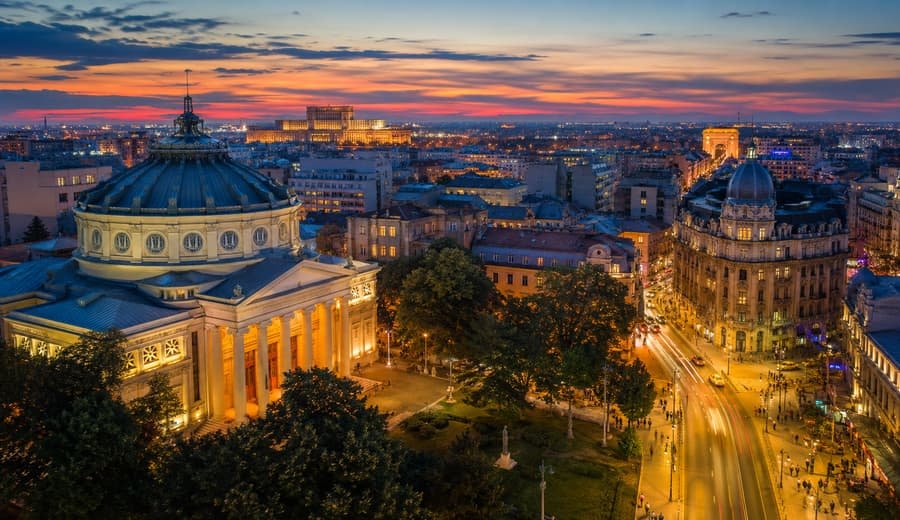
The city
Music in Budapest: Liszt, Bartók, and a method that changed the world
Tony Denesa – Travel Advisor8 min read
Budapest takes music seriously in a way that is visible in the buildings: an opera house on the main boulevard, an academy that is one of the finest concert halls in Europe, and a concert schedule far larger than a city of this size would suggest.
Liszt
Ferenc Liszt — Franz Liszt in German, and the Hungarian order puts the surname first — was born in 1811 in what was then western Hungary. He became the most famous pianist in Europe and arguably the first modern celebrity musician: audiences fainted, the term *Lisztomania* was coined for it, and his technical demands rewrote what the instrument was for.
His relationship with Hungary was complicated. He grew up speaking German, his Hungarian was poor, and the *Hungarian Rhapsodies* draw on urban Roma café music rather than the village tradition later researchers would identify as older. But he identified as Hungarian, and in 1875 he founded the conservatory in Budapest that still bears his name.
The Liszt Academy on Liszt Ferenc tér is worth attending a concert at regardless of the programme: the 1907 Art Nouveau building was restored in 2013 and its main hall is among the best-sounding rooms in Europe.
Bartók and Kodály
The bigger intellectual story is what happened next.
Béla Bartók and Zoltán Kodály began, around 1905, to travel into Hungarian, Slovak, Romanian and Transylvanian villages with an Edison phonograph and record what people actually sang. Thousands of cylinders. What they found was not what the urban salons had assumed Hungarian folk music to be — it was older, pentatonic, structurally unlike Western European tonality, and connected to a much wider Eurasian family.
That research became a compositional method. Bartók did not quote folk tunes decoratively; he absorbed their intervals and rhythms into a modernist language, and the result is some of the most important music of the twentieth century. He left Hungary in 1940 as the political situation worsened and died in New York in 1945.
Kodály stayed, and turned the same research into education. The Kodály method — teaching musical literacy through singing, hand signs and folk material, starting very young — is used in schools across the world, and is probably Hungary's largest single cultural export.
Where to hear music
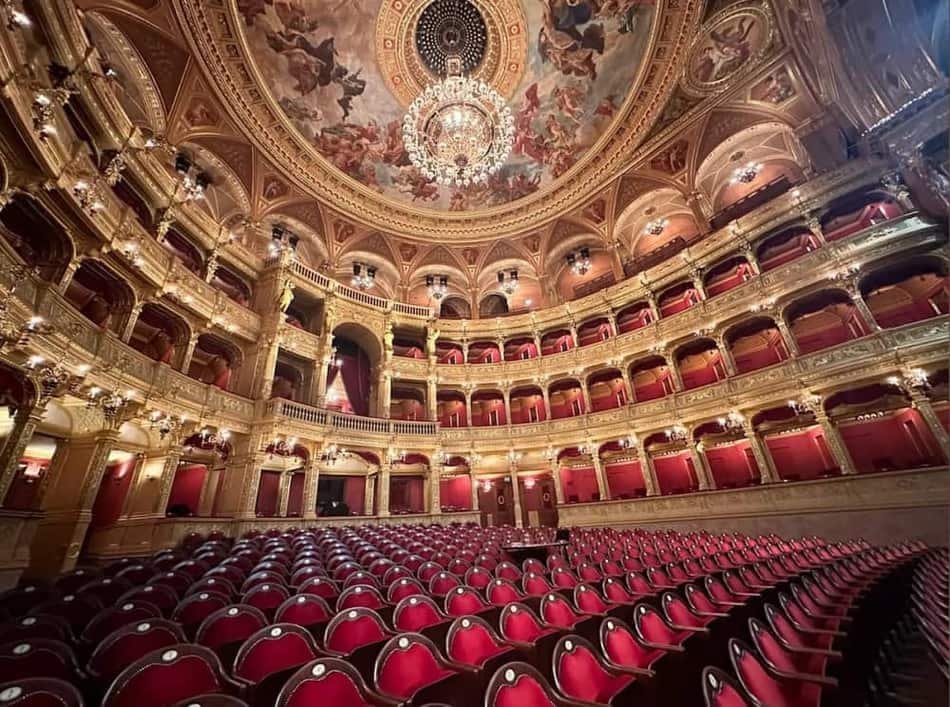
The Hungarian State Opera on Andrássy Avenue, 1884, neo-Renaissance, and comprehensively restored in recent years. Tickets are cheap by Western European standards. There are also daytime building tours if you are not staying for a performance.
The Liszt Academy, as above.
Müpa Budapest in Ferencváros is the modern concert complex — Bartók National Concert Hall, with acoustics designed to a very high specification, plus the Ludwig Museum in the same building.
The House of Music in City Park, opened 2022, is the newest addition: a museum of sound and music with a striking perforated canopy roof, aimed at general visitors rather than specialists.
Churches. St Stephen's Basilica and the Matthias Church on Castle Hill both run organ and choral concert programmes, which are the cheapest way to hear serious music in a serious room.
And the other tradition
Budapest's popular music scene is substantial and is not an afterthought. The ruin bars of District VII run live programmes most nights, there is a long-standing jazz scene, and Akvárium Klub under Erzsébet tér is the central mid-size venue.
At the top of the scale, Sziget on the Danube island in August is one of the largest music festivals in Europe.
A word on "Gypsy music"
Restaurants aimed at visitors often provide a violin band playing what is billed as traditional Hungarian music. What that generally is, is nineteenth-century urban Roma café repertoire — *magyar nóta* — which is a real and skilled tradition, but is not the village folk music Bartók and Kodály were recording, and is not what Hungarians mean by folk music today.
The living version is the táncház — dance house — movement, where people play and dance village repertoire in weekly sessions. It is not a show and visitors are welcome at most of them, which makes it a considerably better evening than the violin at the table.
Booking, and what it costs
This is the part worth knowing, because it changes what is possible on a short trip.
Opera tickets are cheap. A seat at the Hungarian State Opera can cost less than a mid-range restaurant main course, and even good seats are a fraction of what the equivalent would be in Vienna or Milan. The same is true at the Liszt Academy and at Müpa.
That has two consequences. Buy early for anything well known, because locals fill these houses and they are not tourist venues with tourist availability. And be willing to book something you have not heard of — at these prices an unfamiliar programme in an extraordinary room is a low-risk evening.
Dress is smart but not formal. Nobody will turn you away for not wearing a tie.
The Opera also runs daytime building tours, which are the answer if your dates do not line up with a performance — the 1884 interior is worth seeing on its own terms.
Where the composers are
For anyone who wants the biographical version rather than the concert:
- The Liszt Memorial Museum occupies the flat on Vörösmarty utca where Liszt lived in his final years, with his instruments and library largely as he left them. Small, quiet, and much more affecting than its size suggests.
- The Bartók Memorial House is up in the Buda hills, in the villa he lived in until leaving for New York in 1940. It holds concerts in the garden in summer.
- Kodály's flat on Kodály körönd, on Andrássy Avenue, is preserved as a museum.
All three are minor institutions with limited hours and almost no queue — the opposite of the experience at the House of Terror a few hundred metres away.
Where to stay nearby
Live prices and availability on a map centred on this exact spot — hotels, apartments and hostels, so you can judge the walk from here rather than guess from an address.
Bookings made through this map earn us a commission. Your price is unaffected.