Guides
Fisherman's Bastion tickets: what you pay for, and when it is free
Tony Denesa – Travel Advisor8 min read
The single most useful thing to know about the Fisherman's Bastion is that you probably do not need a ticket at all.
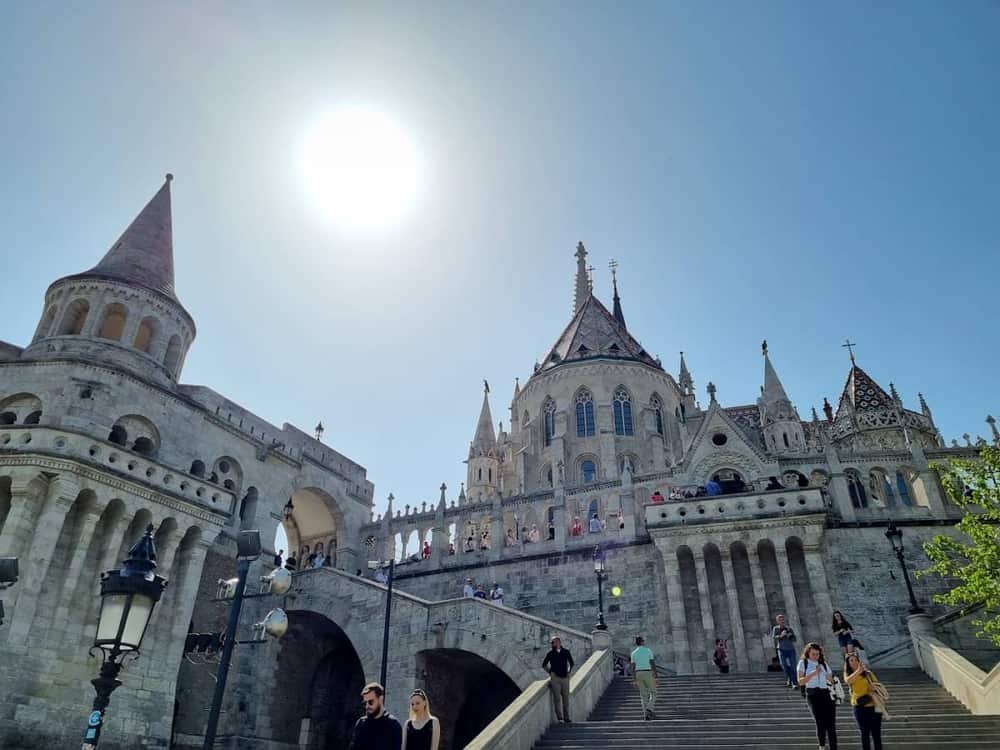
The Bastion is a long white neo-Romanesque terrace with seven towers, built between 1895 and 1902 as a viewing platform. Almost all of it — the arcades, the stairs, the walkway, the view over the Danube to the Parliament — is open to anyone, free, at any hour of the day or night. What is ticketed is one upper section, and even that only during set hours.
What is actually charged
The operator is the Buda Castle district authority, and its 2026 tariff lists two tickets:
- Fisherman's Bastion upper lookout — 1,700 Ft (850 Ft reduced)
- Panorama ticket, covering both sites — 2,700 Ft (1,350 Ft reduced)
Both figures are from the operator's own page, checked 28 September 2026.
Reduced tickets go to under-14s, students with a card, and over-65s — and they are sold only in person at the cash desk, after you show the document. If you buy online you pay full price.
The part most guides miss: the charging hours
The operator does not publish opening hours for the upper terrace. It publishes charging periods:
- 2 January – 31 May: 9:00 – 19:00
- 1 June – 30 September: 9:00 – 21:00
- 1 October – 23 December: 9:00 – 19:00
That wording is the whole trick. Arrive before nine in the morning, or after the evening cut-off, and there is no one to sell you a ticket.
Early morning is the better of the two anyway. The Bastion faces east, the light comes up the river behind the Parliament, and the coach groups have not arrived. Sunrise is the single best hour on Castle Hill, and it costs nothing.
Days when the upper terrace is free outright
The 2026 tariff lists these as free:
- 1 January
- The national holidays — 15 March, 20 August, 23 October
- 24 – 31 December
Those are also, with the exception of the December week, among the busiest days of the year on the hill. The month guides say which to expect.
Is the upper terrace worth 1,700 Ft?
Honestly: only for the photograph. The upper level lifts you perhaps a storey above the free walkway, and the view is the same view. What you buy is a section of railing without other people leaning on it.
Pay it if you are here once, at midday, in summer, and you want a clean shot. Skip it if you are coming early or late, or if you have already decided to go up St Stephen's Basilica dome or the Elizabeth Lookout — both of which give you more height for similar money.
What you are actually looking at
The Bastion is younger than it looks and was never a fortification. Frigyes Schulek — the architect who rebuilt Matthias Church next door in the same campaign — designed it between 1895 and 1902 as a viewing terrace, built on the line of the old castle walls for the millennium celebrations of Hungarian settlement.
The seven towers are the point. They stand for the seven Magyar chieftains who led their tribes into the Carpathian Basin in 895, which is the founding story the whole millennium project was built to tell. The Heroes' Square colonnade at the other end of Andrássy says the same thing in a different shape, and the Millennium article explains what the country was doing in those years.
The name comes from the fishermen's guild, which in the Middle Ages was responsible for defending this stretch of wall — the part of the story that is actually old.
Where to stand
The classic frame is from the northern end, looking south-east: Parliament on the left bank, the river below, the arcade curving away in the foreground. Early morning puts the sun behind the Parliament and the arcade in shadow, which is the photograph everybody wants.
For the Bastion itself in a frame, cross the river and shoot from the Pest embankment near Kossuth tér — the viewpoints article has the rest.
Getting there, and what is next door
Bus 16 from Deák Ferenc tér drops you on the hill. On foot, the stairs from Batthyány tér take about fifteen minutes; the funicular from Clark Ádám tér is charming and usually a queue.
Next to the Bastion: Matthias Church, which does charge and is worth it, and the whole Castle District. Underneath the hill, Hospital in the Rock is the one museum up here that needs booking.
The short version
Go at dawn or after dinner, walk the free terrace, and keep the 1,700 Ft. If you go at noon in August and want the picture without a stranger's elbow in it, pay it — it is a small amount for the best-known view in Hungary. The two-day itinerary puts it at the start of day one for exactly this reason, and the prices page keeps every figure on this site with the date it was checked.
Where to stay nearby
Live prices and availability on a map centred on this exact spot — hotels, apartments and hostels, so you can judge the walk from here rather than guess from an address.
Bookings made through this map earn us a commission. Your price is unaffected.