
Guides
Dohány Street Synagogue tickets: what the ticket covers, and the rules at the door
Tony Denesa – Travel Advisor9 min read
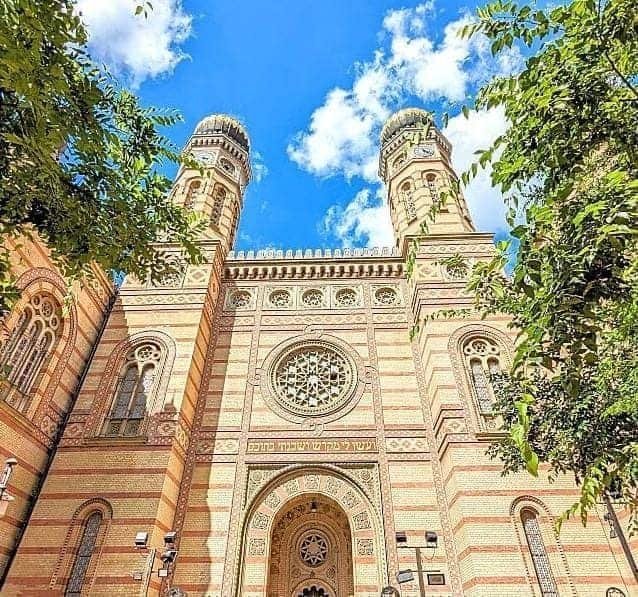
The Dohány Street Synagogue is the largest in Europe and among the largest in the world, and the ticket is not what most visitors assume. It is not admission to a building. It is admission to a complex of six connected sites, and it comes with a guide included.
No price in this guide, and why
The operator sells through a booking system that does not publish a public tariff table — you pick a date and a category before a figure appears. This site does not print prices it has not read off an operator's own page with a date attached, so rather than repeat a number from another guide and let it rot, here is the official ticket page. Checked 28 September 2026.
The prices page carries every figure this site does state, each with the day it was verified. That rule costs us a number here; it is the reason the other numbers are worth reading.
What one ticket actually covers
According to the operator, a single entry ticket is valid for all of:
- The Synagogue itself
- The Hungarian Jewish Museum, built on the site where Theodor Herzl was born
- The Budapest ghetto exhibitions in the cellar
- The Raoul Wallenberg Memorial Park
- The Lapidarium
- The synagogue's graveyard
That is a two-hour visit at minimum, and it is the reason the ticket reads as expensive at the window and cheap by the time you leave.
The free guided tour, which is the real value
Visitors are invited on a guided tour included in the ticket, run in English, German, French, Italian, Spanish, Russian, Polish, Hebrew and Hungarian. The tour takes in the synagogue, the Wallenberg Memorial Park and the graveyard.
Take it. The building does not explain itself: the organ, the two towers, the basilica-like floor plan are all unusual for a synagogue, and the reasons belong to a specific nineteenth-century argument about what Hungarian Jewish life should look like. The Jewish Budapest article covers that history, and the tour covers the rest.
The operator also notes that buying online gets you accelerated admission as well as the guide — worth it on a summer afternoon, when the queue on Dohány utca runs down the street.
What you are standing in
The synagogue was built between 1854 and 1859 to a design by Ludwig Förster, in a Moorish Revival style that borrowed from Islamic architecture in Spain and North Africa — a deliberate choice, made when European Jewish communities were arguing about what a synagogue in a European capital should look like. It seats around three thousand.
Several things about it are unusual enough that visitors assume they have misread the building. It has an organ, which an Orthodox synagogue would not; it has two towers and a floor plan closer to a basilica than to a traditional prayer hall. All of that follows from it being a Neolog synagogue — the Hungarian reform tradition — and the Jewish Budapest article explains the split.
The courtyard is a cemetery, which is the part that stops people. A synagogue courtyard is not normally a burial ground. This one is, because the building stood on the edge of the Budapest ghetto in the winter of 1944–45 and the dead could not be taken out. The graves are of ghetto victims, and the history of the city explains how the boundary came to run here.
In the Wallenberg park behind it stands Imre Varga's weeping willow in steel, each leaf carrying a name. It is the most photographed object in the complex and the least explained by a photograph.
The rules at the door, which are enforced
This is where visitors get caught out, so read it before you go.
Men must cover their heads. If you have a hat or cap, wear it; otherwise a kippah is handed to you after your ticket is validated, and it is worn throughout the complex.
The dress code is not advisory. Sleeveless tops, short skirts and shorts are turned away — the operator states plainly that ticket inspectors will refuse entry. Clothing can be bought from the inspectors if you arrive unprepared, but that is a worse outcome than planning for it.
No eating, drinking or smoking anywhere in the synagogue, the museum or the adjoining areas. There is a café for that.
It is a working place of worship, not a monument, and the rules follow from that.
Ticket validity, which is unusually generous
Two things the operator states, and they are different:
- The entry ticket is valid for up to 90 days from the date of purchase — so buying ahead of a trip is safe.
- Once used, tickets are valid for 2 days.
That second one is the useful one. The complex is large enough that splitting it across two visits — the synagogue and the tour on one day, the museum and the cellar exhibitions on another — is a genuinely better way to see it than forcing it into one afternoon.
Children under 6 enter free.
Where it sits in a trip
The synagogue is the anchor of District VII, and the contrast is the point: the memorial park and the mass graves in the courtyard are a hundred metres from the ruin bars and the street-food yards. The street food guide covers what to eat afterwards.
Pair it with the Shoes on the Danube Bank, which takes two minutes and is the other half of the same story, and with the House of Terror if you have the appetite — the museums guide ranks the rest.
On a short stay, the two-day itinerary puts the synagogue in the second afternoon, which works only if you accept that you will see the complex and not the whole quarter.
Where to stay nearby
Live prices and availability on a map centred on this exact spot — hotels, apartments and hostels, so you can judge the walk from here rather than guess from an address.
Bookings made through this map earn us a commission. Your price is unaffected.