Blog
Budapest street food: what to eat, where, and what to walk past
Tony Denesa – Travel Advisor9 min read
Budapest's cheap food is genuinely good, and almost none of the good version is where visitors eat it. The rule is simple and holds everywhere: the further you are from a place selling the same dish in four languages, the better the dish.
Lángos, done properly
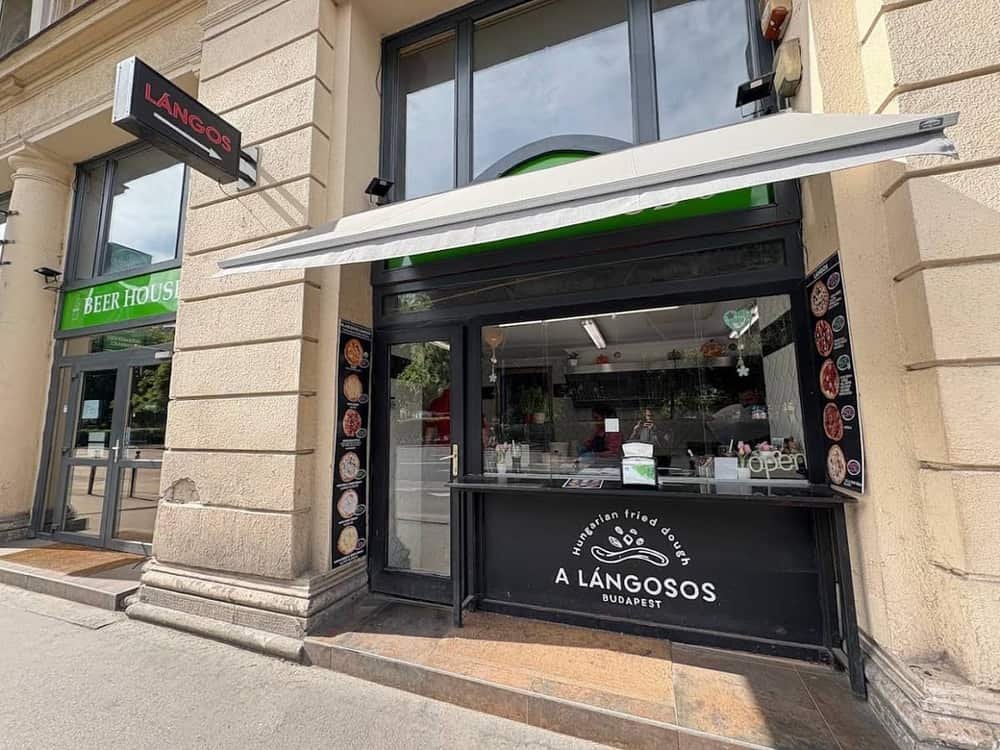
Deep-fried flat dough, and the national street food. The standard dressing is sour cream and grated cheese — *tejfölös-sajtos* — often with garlic rubbed on first.
Where. A market hall, a neighbourhood bakery counter, or a lake in summer. Not a stand on Váci utca and not one in the Castle District.
What to avoid. Anything topped with sausage, ham, corn and four sauces at once. That is a version built for photographs.
The market halls
This is the centre of the whole subject.
The Great Market Hall in Ferencváros is the famous one, and its upstairs food counters are genuinely good if you pick the ones with a Hungarian queue rather than the ones with laminated picture menus.
Hold utca market, near the Parliament in District V, is the one to go to instead. Smaller, upstairs kitchens, mostly office workers at lunchtime, and much better value.
Lehel Csarnok in Újlipótváros and Fény utca in the Buda hills are the local ones, where nobody is catering to you at all.
What to actually order
Kolbász and hurka. Grilled Hungarian sausage, and the blood-and-liver sausages that go with it. Ordered by weight at a butcher's counter inside a market hall, with bread, mustard and *savanyúság* — the sharp preserved vegetables that accompany everything here. This is the most Hungarian thing on this page.
Gyros. Budapest's gyros is unreasonably good and unreasonably cheap, and it is what the city actually eats late at night. Do not be precious about it not being Hungarian — the eating guide makes the same point about the city's whole food scene.
Soup, from a bar. *Bableves* (bean), *gulyásleves* (the actual goulash, which is a soup), *Jókai bableves*. Several counter places in District VII do nothing else.
Pogácsa. A small savoury scone, usually with cheese or crackling, sold at every bakery. The correct thing to buy at a train station.
Rétes. Hungarian strudel — cherry, apple, poppy seed, or the sweet curd version. Buy it at a dedicated *rétesbolt*, not a café.
Túró Rudi. A chilled bar of curd cheese in dark chocolate, from any supermarket fridge, in a red-spotted wrapper. It is one of the few genuinely Hungarian things you can take home, and it does not travel well, so eat it there.
The cukrászda, which is the other half of this
Hungary's pastry shop — *cukrászda* — is a separate institution from the coffee house and is where the country keeps its best cheap eating. Order at the counter, eat standing or at a small table.
Dobos torta. Sponge, chocolate buttercream, and a sheet of hard caramel on top that you are supposed to crack. Invented in Budapest in 1885 and still the national cake.
Eszterházy torta. Almond meringue layers with a vanilla-cognac cream. The one to order if Dobos feels too sweet.
Krémes. Two sheets of pastry with a slab of vanilla custard between them, taller than it should be. The most ordinary and most loved thing in the case.
Somlói galuska. Sponge, walnut, chocolate sauce, rum and whipped cream in a bowl. It is not elegant and it is superb.
Zserbó. Layers of shortcrust, apricot jam and walnut under dark chocolate. Named after Gerbeaud, whose café is on Vörösmarty tér.
A slice of any of these costs a fraction of what a dessert costs at a restaurant, and it is better. This is the single most underused piece of eating advice in Budapest.
What to walk past
Kürtőskalács — chimney cake. It is delicious and it is Székely, from Transylvania, not a Budapest speciality. The versions sold at central tourist stands are the least good ones. Have it at a Christmas market where it is made in front of you, or at a proper bakery, or not at all.
Anything on Váci utca. Prices are for a captive audience and the food is worse. The cost guide has the wider point.
Anything where someone outside is inviting you in. This is the same rule that protects you from the bar scam, and it applies to food too.
The courtyards
District VII has a category that does not exist elsewhere: the street-food yard, a ruin-bar-style courtyard with six or eight independent kitchens around it and shared tables in the middle. You order separately, sit together, and it is the easiest place in the city to eat alone — a point the solo guide makes at length.
The ruin bar guide covers what is next door to them.
Fröccs, and how to order it
Not food, but the drink that goes with all of it: wine spritzer, and Hungarian has named ratios for it. *Kisfröccs* is one part wine to one of soda; *nagyfröccs* is two to one; *hosszúlépés* is one to two; *házmester* and *viceházmester* go further in each direction.
Ordering one by name is the single most efficient way to stop being treated as a tourist. The wine article explains what should be in it.
Practical
Carry some cash. Cards work almost everywhere now, but market-hall counters and small bakeries are the last holdouts.
Lunch is the meal. The *napi menü* — a fixed two or three courses at a low fixed price — is the best-value food in Budapest and it exists only at lunchtime.
Market halls close early, often by two on Saturday and all day Sunday. Plan around it.
Where to stay nearby
Live prices and availability on a map centred on this exact spot — hotels, apartments and hostels, so you can judge the walk from here rather than guess from an address.
Bookings made through this map earn us a commission. Your price is unaffected.