The city
Where Hungarian food actually comes from
Tony Denesa – Travel Advisor9 min read
Hungarian cooking is usually explained with one word — paprika — and the word is right but the story behind it is not the one most people assume.
Paprika is a newcomer
Capsicum peppers are American. They reached Europe after 1492, arrived in Hungary through the Ottoman occupation in the sixteenth and seventeenth centuries, and for a long time afterwards were grown as an ornamental curiosity or used by peasants who could not afford black pepper.
Respectable Hungarian cooking did not use paprika until the eighteenth century, and it only became the defining ingredient of the national cuisine in the nineteenth. What is now presented as timeless tradition is roughly as old as the Chain Bridge.
Two things then made it permanent. Hungarian growers developed sweet, non-pungent varieties, which turned paprika from a heat source into a flavour and colour base you could use generously. And in the 1920s the Szeged chemist Albert Szent-Györgyi isolated vitamin C from Hungarian paprika, won a Nobel Prize for it, and gave the country a scientific claim on its own condiment.
The three influences
Ottoman. Peppers, and a wider habit of stuffed vegetables — *töltött paprika*, stuffed cabbage — plus the strudel-adjacent layered pastries that arrived through the Balkans.
Austrian. The Habsburg centuries put Viennese technique into Hungarian kitchens: breaded and fried meat, the pâtisserie tradition that produced the coffee house cake counter, and the general expectation that a serious meal has several courses.
Jewish. Substantial and routinely under-credited. Budapest's Jewish community was a quarter of the city before 1944, and much of what is now served as classic Hungarian home cooking — goose dishes, cholent, stuffed things, certain pastries — passed through those kitchens. Rosenstein still cooks the crossover openly.
Underneath all three sits the older layer: a pastoral, meat-and-grain tradition from a people who arrived as herders, which is where the cauldron cooking comes from.
Goulash is a soup
The single most common misunderstanding, and worth being firm about.
Gulyás is a soup. Beef, onion, paprika, potato, carrot, sometimes small pinched pasta, cooked in a cauldron. The name means *herdsman*, because that is who made it — over a fire, in a *bogrács*, on the plain.
What English speakers usually mean by "goulash" — thick, stew-like, served over noodles — is closer to pörkölt, which is the stew proper: meat and onion and paprika cooked down with very little liquid. Paprikás is pörkölt finished with sour cream, and *csirkepaprikás*, chicken paprikash, is the version most visitors have actually eaten.
Order *gulyás* expecting a stew and you will be surprised. Order it expecting a soup and it is one of the best things in the country.
The rest of the canon
- Halászlé — river-fish soup, deep red with paprika, from the Danube and Tisza. Fiercely regional and genuinely spicy.
- Töltött káposzta — stuffed cabbage, slow-cooked, the winter dish.
- Lecsó — peppers, tomato, onion, cooked down; the summer dish, and the closest thing to a national vegetable preparation.
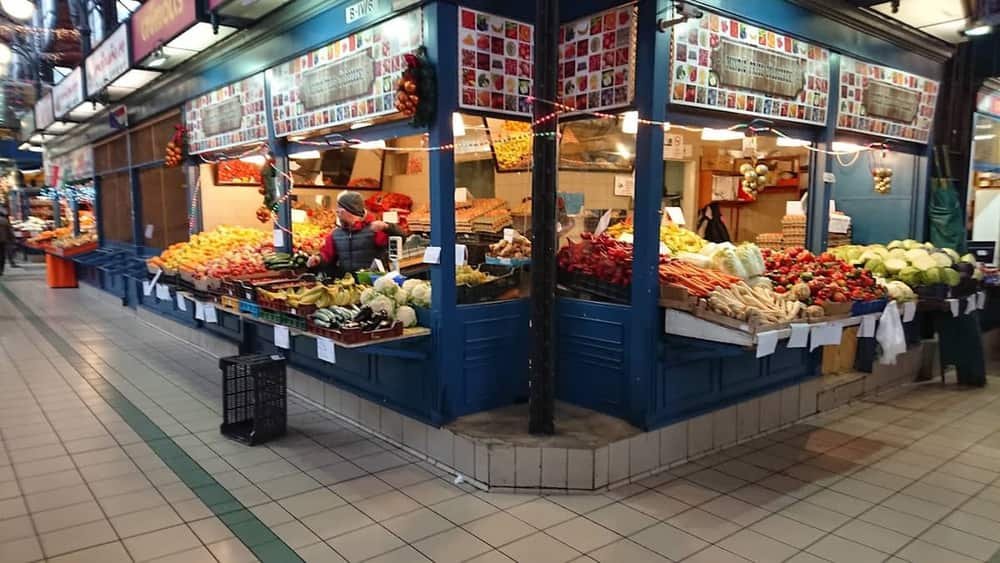
- Lángos — deep-fried flatbread with sour cream and grated cheese. Market and festival food, and the Great Market Hall upstairs is where most visitors meet it.
- Hortobágyi palacsinta — savoury pancake rolled around meat in paprika sauce.
- Túrós csusza — pasta with curd cheese and bacon, which sounds wrong and is not.
- Somlói galuska, Dobos torta, rétes — the sweet end, covered in the coffee house piece.
Where to actually eat it
The honest answer is that the best Hungarian cooking is domestic and you will not be invited to it, so the question becomes which restaurants do the repertoire properly rather than as costume.
Hungarikum Bisztró does the classics carefully and is booked out most evenings. Rosenstein is the Jewish-Hungarian crossover and is the more interesting meal. Gundel by the City Park is the grand historic version. Menza is modernised canteen cooking and the easiest place to take a group.
For the market version, the upstairs food counters at the Great Market Hall are cheap, busy and fine — go at lunchtime and avoid the stalls with photographs of the food.
The full eating guide covers the fine-dining end, which is now a serious scene with several Michelin stars, and the street food article covers the other end.
What to avoid
Restaurants on the pedestrianised stretch of Váci utca in District V, and anywhere with a person outside inviting you in. Three streets in any direction is better and cheaper, without exception.
Where to stay nearby
Live prices and availability on a map centred on this exact spot — hotels, apartments and hostels, so you can judge the walk from here rather than guess from an address.
Bookings made through this map earn us a commission. Your price is unaffected.