The city
A short history of Budapest
Tony Denesa – Travel Advisor2 min read
Three towns
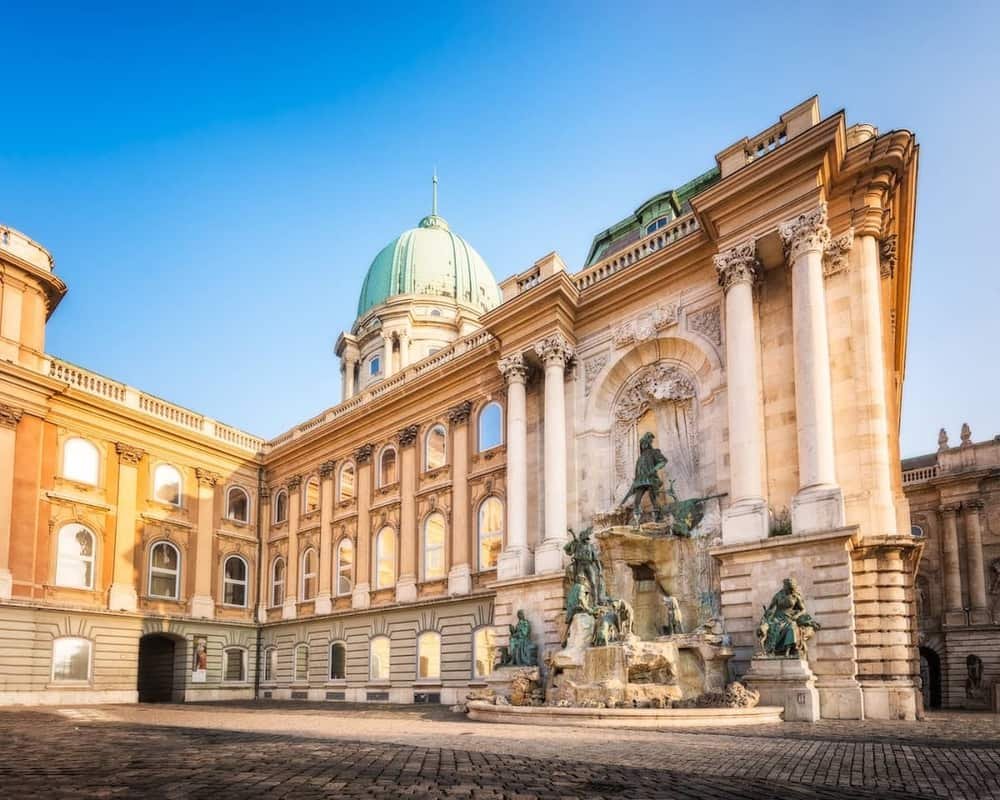
Budapest is a nineteenth-century invention. Until 1873 there were three separate places: Buda, the royal town on the hills; Pest, the trading town on the flat east bank; and Óbuda, older than both, upstream.
Their unification created a capital of a size and ambition that the following forty years filled in almost completely — which is why so much of central Budapest is dated between 1873 and 1914, and why it looks as coherent as it does.
Before that
The Romans got there first. Aquincum, in what is now Óbuda, was the capital of the province of Pannonia Inferior, with a civilian town, a military camp and two amphitheatres. Substantial parts survive and can be visited.
Medieval Buda became a royal seat, and under Matthias Corvinus in the fifteenth century a European centre of Renaissance learning. That ended in 1541, when the Ottomans took the city and held it for a hundred and forty-five years. They built the baths — Rudas, Király and Veli Bej all date from that period and all still function, which makes them among the oldest continuously used buildings in the city.
Habsburg forces retook Buda in 1686, largely destroying it in the process.
The imperial century
After the Compromise of 1867 created Austria-Hungary, Budapest became the second capital of a dual monarchy and grew at a speed comparable to Chicago. The Parliament, the Opera House, Andrássy Avenue, the Grand Boulevard, continental Europe's first underground railway in 1896, and most of what visitors come to see all belong to this period.
The Millennium celebrations of 1896, marking a thousand years since the Magyar conquest, are the reason for a striking number of them.
The twentieth century
The First World War and the Treaty of Trianon cost Hungary two thirds of its territory. The Second brought the destruction of the Jewish community of Pest — the largest in Europe outside Poland — and the siege of Budapest in the winter of 1944–45, in which every bridge over the Danube was destroyed and much of the city with them.
Four decades of Communist rule followed, punctuated by the 1956 uprising, which was crushed within weeks. Bullet damage from it is still visible on facades if you look up in the right streets.
Since 1989
The statues came down — most of them to Memento Park rather than a scrapyard — and the city has spent thirty years repairing what the century did to it. The riverbanks, the Castle Quarter and Andrássy Avenue are a UNESCO World Heritage site.