Guides
Where to stay in Budapest: an honest guide to the districts
Tony Denesa – Travel Advisor11 min read
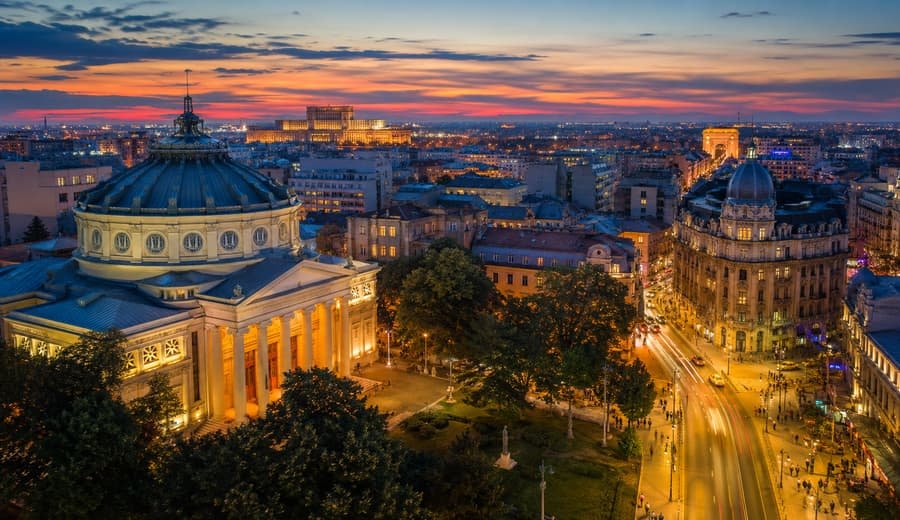
Budapest is a compact city with an unusually clear geography, and once you understand it the accommodation question mostly answers itself. The Danube splits it: Buda on the west bank is hilly, green, residential and quiet; Pest on the east is flat, dense, and where nearly everything you came to see actually is.
Almost every first-time visitor should stay in Pest. The exceptions are specific and are covered below.
The postcode trick
Before anything else, the single most useful thing to know when reading a listing.
Budapest postcodes are four digits: a 1 for the capital, then two digits that give the district number, then one more digit. A property at 1051 is in District V. One at 1071 is in District VII. One at 1181 is in District XVIII, which is out by the airport and roughly forty minutes from the river.
Listings describe themselves as "central" with enormous flexibility. The postcode does not. Check it before you book, every time, and you will avoid the most common accommodation mistake in this city — a cheap apartment that turns out to be a long commute from everything.
The full district system is worth five minutes if you want the whole picture.
First, the thing that changed in 2026
Short-term apartment rentals are now banned in District VI, and District VII has followed.
District VI — Terézváros — passed a total prohibition that took effect on 1 January 2026: not a cap, not a licence quota, but zero permitted nights per year, with fines running into millions of forints for operators who ignore it. District VII, the Jewish Quarter, brought in its own restriction under Decree 33/2025.
This is the single most consequential thing to know before booking, and it changes the advice on this page in a specific way:
- Hotels, aparthotels and licensed guesthouses are unaffected. They are a different legal category and continue to operate normally in both districts.
- Airbnb-type apartment lettings in Districts VI and VII are the problem. A listing that still appears for those districts is either a legally operating hotel-class property or it is not compliant — and a cancelled booking three days before arrival is a real risk rather than a theoretical one.
If you want an apartment rather than a hotel room, look at Districts V, VIII, IX or XIII. If you want District VI or VII, book a hotel.
The rules in this area have moved twice in two years and may move again, so treat any listing in those two districts as something to verify rather than assume.
District V — Belváros & Lipótváros
The formal centre, and the safe answer.
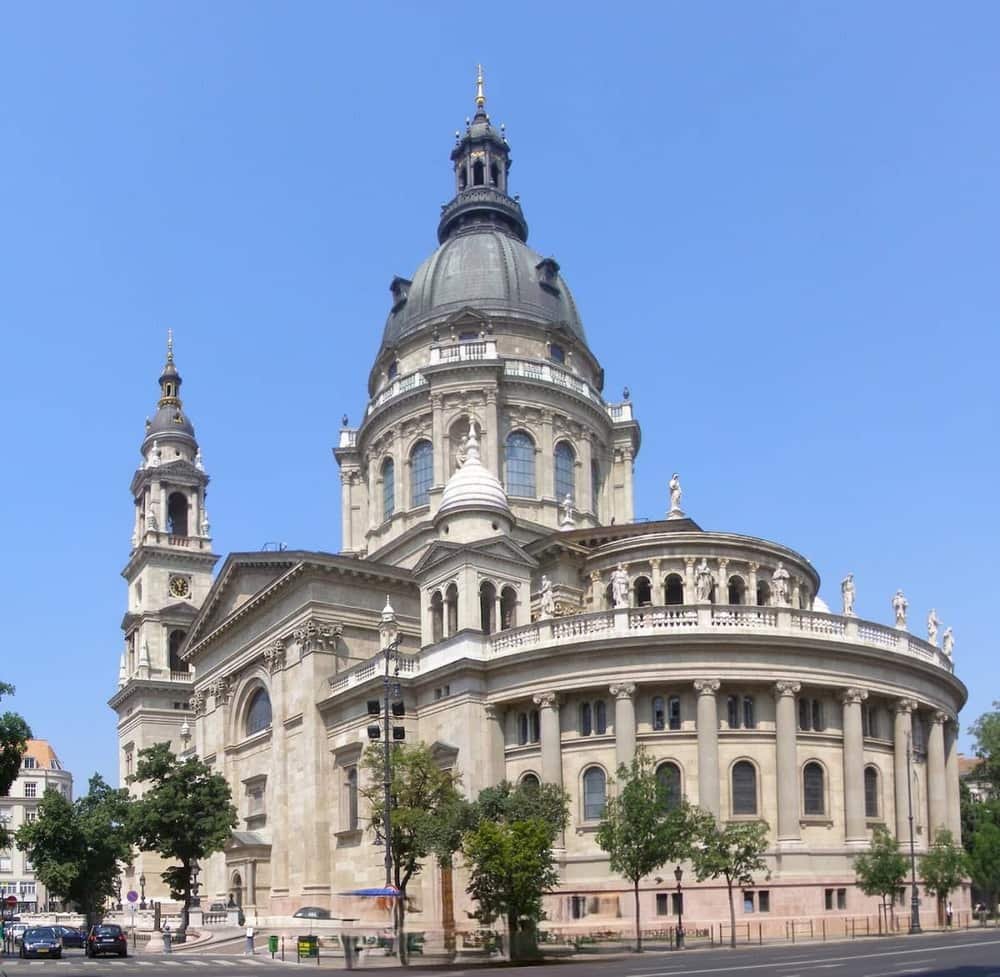
This is where the Parliament, St Stephen's Basilica, the Chain Bridge and Vörösmarty Square are. It is walkable to nearly everything, well served by all three older metro lines, and comfortably the most polished part of the city.
It suits first-time visitors, short trips, anyone travelling with limited mobility, and anyone who does not want to think about transport at all.
The catch is price and character. You pay a premium for the address, and the streets immediately around the pedestrianised shopping axis are as internationally generic as Budapest gets. The restaurants directly on Váci utca are, almost without exception, worse and dearer than what you would find three streets away.
Browse what is in District V.
District VII — the Jewish Quarter
The most interesting district in the city, and the one people most often book without understanding what they have booked.
This is the historic Jewish quarter, home to the Dohány Street Synagogue — the largest in Europe — and, since the early 2000s, to the ruin bars. Szimpla Kert, Instant-Fogas, Mazel Tov and Ellátó Kert are all within a few streets of each other, and the food here is among the best in Budapest.
It suits anyone under about forty travelling for the city rather than for rest, and anyone who wants to walk home from dinner.
The catch is real and worth stating plainly. Kazinczy utca, Gozsdu udvar and the streets around them are genuinely loud until three or four in the morning, every night in summer, and the noise is street noise — people, not music. A double-glazed courtyard-facing room is fine. A cheap street-facing room above a bar is not, and no amount of "central location" makes up for it.
The rule of thumb: book District VII, but book the northern or eastern edge of it rather than the middle. You lose four minutes of walking and gain the ability to sleep.
And book a hotel here rather than an apartment. District VII brought in its own short-term rental restriction under Decree 33/2025, following District VI — so the apartment listings that made this the cheap-and-central option are being withdrawn. Hotel-class properties are unaffected.
See the Jewish Quarter in detail, or the full ruin bar guide.
District VI — Terézváros & Andrássy
The elegant compromise — and, since January 2026, hotels only.
Andrássy Avenue runs through it — a UNESCO-listed boulevard of nineteenth-century mansions, with the Opera House and the House of Terror on it and the M1, the oldest metro line on the European continent, running underneath. It is five to fifteen minutes' walk from both District V and District VII, so you get both without living in either.
It suits second visits, couples, anyone who wants good restaurants and a quiet street, and anyone travelling in a group who cannot agree between the centre and the nightlife.
The catch is now twofold. It is a big district, and the far end towards Heroes' Square stops being walkable to the centre — check the postcode, since 1061 and 1062 are close in and 1067 and 1068 less so.
And the short-term rental ban means the apartment stock here is simply gone. That is not necessarily bad news for a visitor: hotel supply in District VI is good and the ban has taken a lot of noise out of the residential streets. But if your plan was a cheap flat on Andrássy, the plan needs changing.
More on Terézváros.
District XIII — Újlipótváros
Where people who live in Budapest actually live, and increasingly where repeat visitors stay.
It sits directly north of District V along the river: a grid of 1930s apartment blocks, a good market, genuinely local restaurants and cafés, and Margaret Island at the top of it. Rents are lower, the streets are quiet, and the tram along the embankment gets you to the centre in ten minutes.
It suits longer stays, families, and anyone on their second or third visit.
The catch is that there is no single sight in the district, so it can feel like staying in a nice suburb — which is precisely what some people want and others do not.
More on Újlipótváros.
District VIII — the Palace Quarter
The best value in the city, with a caveat that is genuinely a caveat.
The inner part of District VIII is a quarter of nineteenth-century palaces and university buildings, with the Hungarian National Museum at its edge and New York Café — arguably the most ornate coffee house in Europe — on its boundary. It has been steadily gentrifying for twenty years and the inner streets are pleasant.
The caveat: District VIII is large, and the outer part of it, beyond the Grand Boulevard, remains rough in places. The difference over a few hundred metres is real. Inside the boulevard is fine; the postcode to look for is 1088 or 1082.
More on the Palace Quarter.
District I — the Castle District
The postcard, and the one place I would tell most people not to stay.
The Castle Hill is magnificent, and it is also a plateau sixty metres above the river with about two thousand residents, no supermarket worth the name, restaurants priced for a captive audience, and total silence after the last coach leaves at six. Getting down to the city means the funicular, a bus, or a steep walk.
It suits honeymooners, people on a two-night trip who want the view more than the city, and photographers.
It does not suit anyone who wants dinner options, a shop, or a short walk home.
Buda, if you want quiet
If Pest sounds like too much, the sensible Buda choices are the streets below Gellért Hill — walkable across the bridge to the centre, and next to the Gellért and Rudas baths — or Óbuda if you are staying a while and want a real neighbourhood.
The Buda Hills and Hegyvidék are beautiful and are a genuine commute. Book them in August, when the temperature difference is worth something, and not otherwise.
What to actually do with this
Pick the district first and the property second. In a city this walkable, the difference between a good and a bad trip is far more often the twenty minutes of walking you did or did not have to do than it is the room itself.
Then check the postcode.
Where to stay nearby
Live prices and availability on a map centred on this exact spot — hotels, apartments and hostels, so you can judge the walk from here rather than guess from an address.
Bookings made through this map earn us a commission. Your price is unaffected.