Guides
Budapest Christmas markets: which one is worth your evening
Tony Denesa – Travel Advisor9 min read
Budapest runs one of the better Christmas market seasons in Central Europe, and unlike some cities it does not stretch to a dozen mediocre ones. There are two that matter, a third worth an hour, and a light projection that is genuinely worth timing your evening around.
The season typically runs from mid-November to the first days of January, with the markets at their fullest in the second half of December. For everything else about the season, see Budapest in winter.
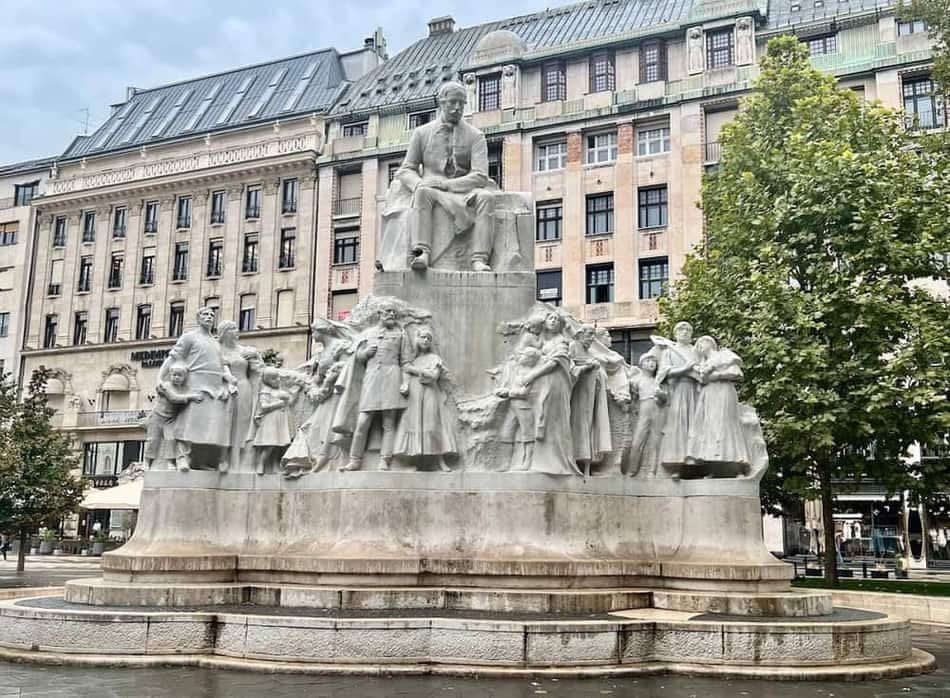
Vörösmarty tér — the big one
Vörösmarty Square in District V holds the city's oldest and largest Christmas market, at the head of the Váci utca pedestrian street.
It is the polished one: a large square of wooden chalets, a stage with a daily programme, craft stalls that are genuinely juried rather than a free-for-all, and the strongest concentration of hot food in the city centre. It is also the most expensive and the most crowded, and after about six in the evening in late December it can be difficult to move.
Go early. Between four and five it is lit, cold, and navigable. By seven it is a queue.
St Stephen's Basilica — the better-looking one
The market in front of St Stephen's Basilica, a few minutes north, is the one most people end up preferring.
It is smaller and arranged in a ring around the square, with an ice rink for children in the middle and the basilica facade closing the view. That facade is the reason to come: through the season it carries a light projection shown at regular intervals through the evening — a full-height animated display on the church front, and the single most photographed thing in Budapest in December.
The food here is better than at Vörösmarty and the crowd is marginally thinner. If you are only doing one market, do this one.
What to actually eat
The markets are a good place to eat properly rather than a place to buy a snack, and the repertoire is specific.
- Kürtőskalács — chimney cake. Sweet dough wound round a spindle, baked over charcoal, rolled in sugar, cinnamon or walnut. It is the market food most associated with Hungary and it is genuinely better made fresh at a stall than anywhere indoors.
- Lángos — deep-fried flatbread with sour cream and grated cheese, and optionally garlic. Enormous, and a meal.
- Töltött káposzta — stuffed cabbage, slow-cooked, served from vats. Cold-weather food that makes complete sense at minus two.
- Kolbász — grilled sausage, usually with mustard and bread, and the honest choice at any stall with a queue of locals.
- Forralt bor — mulled wine, both red and white. Most stalls charge a deposit on the mug, refunded when you return it.
- Rétes — strudel, most often with sour cherry or *túró* (curd cheese).
If you want a proper sit-down meal in the same evening, Hungarikum Bisztró and Rosenstein are both a short walk away, and both need booking in December.
The third one
The Advent market on Erzsébet tér and a scattering of smaller neighbourhood markets appear through the season. The most interesting of the small ones is usually in the Jewish Quarter, where the mood is younger and the food less traditional.
The Great Market Hall in Ferencváros is not a Christmas market but is worth an hour in December, when the upstairs food counters are at their best and the ground floor is full of paprika, sausage and preserves being bought seriously by people cooking for the holidays.
Warmth, which is the real planning problem
December in Budapest runs around 0 to 5°C, and the markets are outdoors. Two hours is the realistic limit before you need to be indoors.
The correct combination is a market and then a thermal bath. Széchenyi stays open into the evening and its outdoor pools at 38°C in near-freezing air are the definitive Budapest winter experience — steam, snow on the neo-Baroque stonework, and chess players who are entirely unbothered by the season.
Rudas has the rooftop pool with the river view, which is even better in the cold, and Gellért is the most beautiful indoors. The comparison guide will decide it for you.
Alternatively, a grand coffee house: New York Café, Gerbeaud or Central. Gerbeaud is on Vörösmarty tér itself, which makes it the obvious warming stop between markets — and it has been on that square since 1858.
Practical
- The markets are cash-friendly but card is accepted almost everywhere now. Mug deposits are usually cash.
- Pickpocketing rises with the crowd density at Vörösmarty in late December. Normal precautions, nothing dramatic.
- Most markets close on 24 December in the early afternoon and many stay shut on the 25th.
- New Year's Eve on the embankment and around Erzsébet tér is large, loud and free.
- Flights and hotels are cheapest in the first half of December, before the markets fill.
Where to stay nearby
Live prices and availability on a map centred on this exact spot — hotels, apartments and hostels, so you can judge the walk from here rather than guess from an address.
Bookings made through this map earn us a commission. Your price is unaffected.