
The city
The city with a cave system underneath it
Tony Denesa – Travel Advisor8 min read
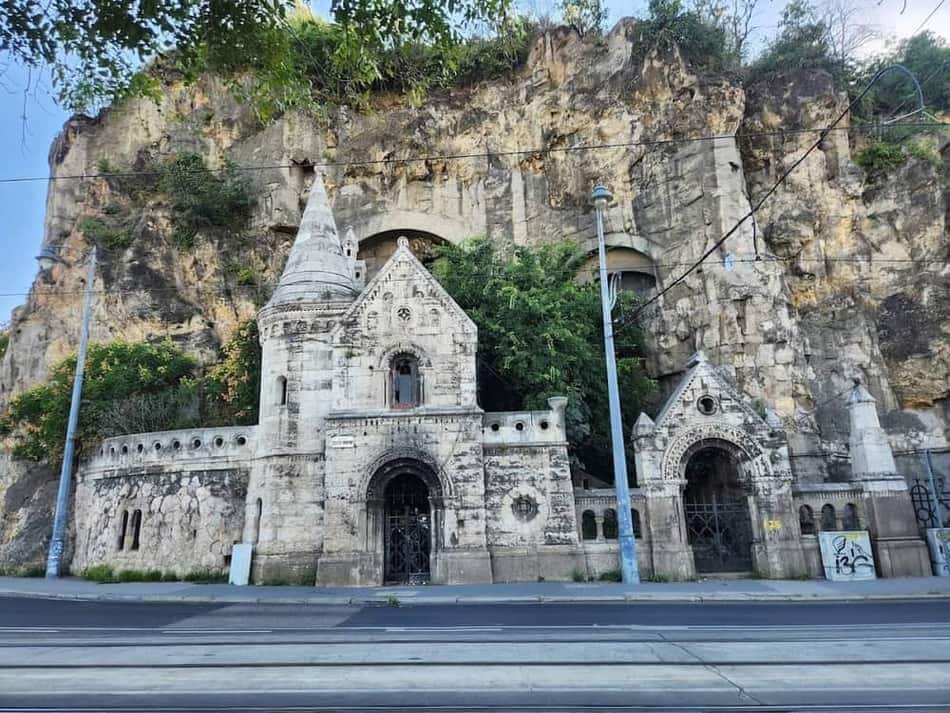
Budapest is the only capital city in the world with an extensive natural cave system beneath it, and the reason is the same one that gave it the thermal springs.
How they formed, and why that is unusual
Most caves are carved from above: rainwater picks up carbon dioxide, becomes weakly acidic, and dissolves limestone as it sinks.
Buda's caves were largely carved from below. Warm, mineral-rich water rising along the fault line under the Buda hills dissolved the limestone upwards, which produces a different kind of cave — rounded chambers, spherical niches, and mineral formations you do not get in ordinary rainwater caves, including gypsum crystals and aragonite.
Over two hundred caves are known under the city. They hold a constant temperature of about twelve degrees, year round, which makes them one of the more practical answers to a Budapest summer.
The show caves
Pálvölgyi Cave, in the Buda hills, is the longest in the system and the one most visitors do. The standard tour is a walkway route with a lot of steps and some narrow sections; there is also a longer adventure route for people who want to crawl.
Szemlő-hegyi Cave, nearby, is the opposite: level, wide, and lined with the mineral formations that make these caves geologically distinctive. It is easy walking and is the one to pick with children or with limited mobility. The air is used therapeutically for respiratory conditions.
Both are managed sites with guided tours, and both need a jumper — twelve degrees after a summer afternoon is a shock.
The church in the rock
Gellért Hill Cave is a natural cave on the river side of Gellért Hill that has been a working church since 1926, when Pauline monks — Hungary's only home-grown monastic order — established a chapel inside it.
Its twentieth century is the story. In 1951 the communist authorities raided it, executed the superior, imprisoned the monks and sealed the entrance with a concrete wall. It stayed sealed for thirty-eight years and was reopened in 1989.
It is now a functioning church again, entered from the road below the Citadella, and it is unlike anything else in the city — a nave in a cave, with the Gellért Baths a two-minute walk away.
The hospital in the rock
Under Castle Hill runs a separate system: a natural network of cavities in the limestone, enlarged and connected over centuries into cellars, wells and tunnels.
Hospital in the Rock occupies part of it. Built as an emergency surgical hospital before the Second World War, it treated casualties during the siege of Budapest in 1944–45 at many times its designed capacity, was used again in 1956, and was then converted into a nuclear bunker and kept operational and secret into the 1960s.
It opened as a museum in 2008. Entry is by timed guided tour and it is one of the few museums in Budapest worth booking in advance. The rooms are laid out as they were, with original equipment.
The Castle labyrinth
The cellar network under the Castle District has been used as storage, shelter and — during the Ottoman period — prison. Parts of it are open as a commercial "labyrinth" attraction, which is atmospheric rather than historical; the Hospital in the Rock is the serious use of the same geology.
Practical
- Twelve degrees. Take a layer, whatever the weather outside.
- Book the Hospital in the Rock, which runs on timed tours and fills.
- Pálvölgyi has stairs and tight sections; Szemlő-hegyi does not. Choose accordingly.
- They are in District II, reachable by bus from Kolosy tér, and are easy to combine with Óbuda and Aquincum in one northern day.
The family guide covers which of these work with children — broadly, Szemlő-hegyi yes, Pálvölgyi from about eight, and the Hospital in the Rock from about ten.
The cellars, which are a different thing
Under Castle Hill and across parts of Pest there is a second underground that is not natural at all: cellars, cut by people, over centuries.
On the Buda side the natural cavities were enlarged and joined into a warren used for storage, water and — during the Ottoman period — imprisonment. On the Pest side, Kőbánya sits over tens of kilometres of limestone quarry galleries, emptied to build the city above and later used as brewery cellars. Budafok in the south has its own network, over a hundred kilometres of it, used for wine.
Three different districts, three different reasons, and all of them the same rock.
Why the caves matter to the city above
The geology is not a curiosity here — it determines where Budapest is.
The fault line that produced the caves also produced the springs, and the springs decided where the Romans put Aquincum, where the Ottomans put Rudas and Király, and where the nineteenth century put Széchenyi. The limestone gave the city its building stone and, in Kőbánya and Budafok, its cellars.
A city sitting on soft rock full of hot water is an unusual thing, and almost everything distinctive about Budapest follows from it.
Where to stay nearby
Live prices and availability on a map centred on this exact spot — hotels, apartments and hostels, so you can judge the walk from here rather than guess from an address.
Bookings made through this map earn us a commission. Your price is unaffected.