The city
Forty years of communism, and what Budapest kept from it
Tony Denesa – Travel Advisor8 min read
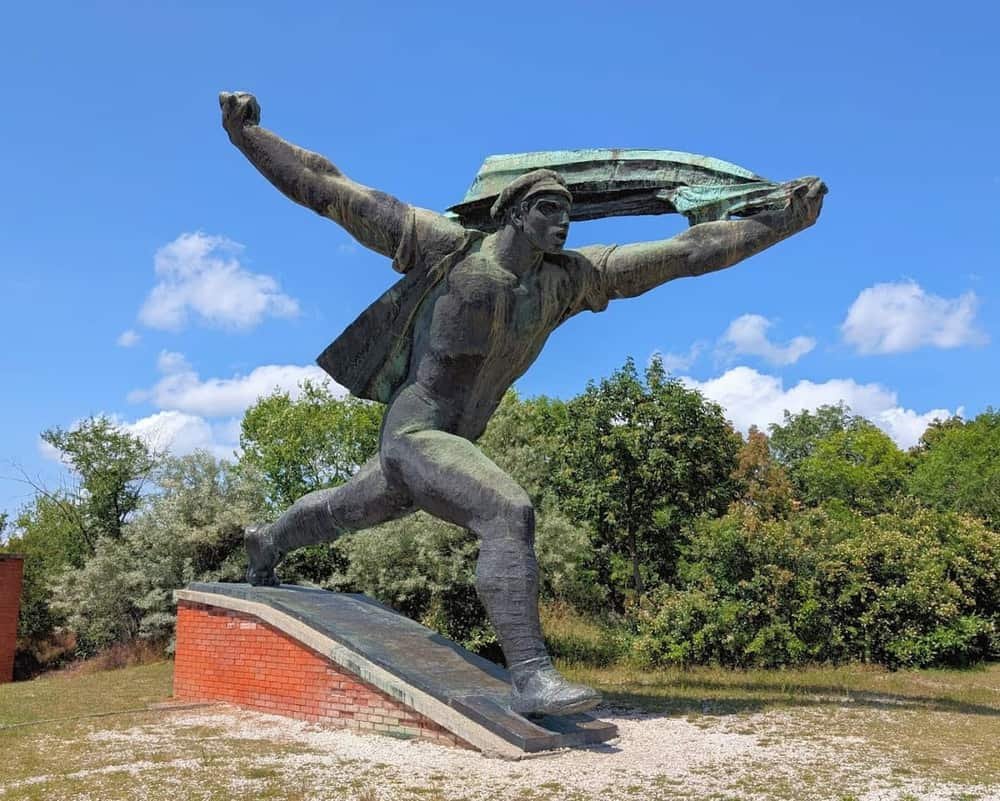
Between 1949 and 1989 Budapest was the capital of a one-party state, and a visitor today walks past the evidence constantly without recognising it.
Two very different halves
The Rákosi years, 1949–1956, were Stalinism without qualification: show trials, forced collectivisation, a secret police that ran a network of informers, and a standard of living that fell while the state claimed otherwise. The gigantic Stalin statue in the City Park belongs to this period, as does the cellar at Andrássy út 60 that is now the House of Terror.
Then came 1956, the revolution, and its suppression.
The Kádár years, 1956–1989, were something else. János Kádár came in on Soviet tanks and executed Imre Nagy, and then spent thirty years buying consent. The formula was stated bluntly — *whoever is not against us is with us* — and it meant: stay out of politics and we will leave you alone.
What followed was goulash communism. Limited private enterprise from the 1960s. Consumer goods. Permission to travel west, rationed but real. Western films and music, censored but present. By the 1980s Hungary was the most liveable country in the bloc, and Hungarians called it *the happiest barracks*.
The phrase does the work. It was more comfortable than East Germany or Romania. It was still a barracks, the borders were still controlled, the press was still censored, and the bill was being paid with Western loans that came due catastrophically in the late 1980s.
What it built, and where a third of the city lives
The most visible communist inheritance is housing. Between the 1960s and the 1980s the state built enormous prefabricated estates — *panel* blocks — around the edge of the city: Újpalota in District XV, Havanna in Pestszentlőrinc, estates across Kőbánya and Csepel.
Something like a third of Budapest's population lives in them. They are almost entirely absent from tourist accounts of the city, and the accounts are the poorer for it: these are well-served neighbourhoods with wide green space between the blocks and functioning local infrastructure, and they look nothing like the reputation the building type carries in Western Europe.
The M2 and M3 metro lines are also from this period — Soviet-built, deep, and the M3's original rolling stock ran until very recently.
What it demolished
Churches were not destroyed wholesale, but the Gellért Hill Cave church was sealed with concrete in 1951 and stayed sealed until 1989, with its monks imprisoned. Private property was nationalised — including the coffee houses, which is why a city that had five hundred of them had almost none by 1960.
The buildings of the Jewish Quarter were taken into state ownership and left to decay for forty years, which is the direct reason the ruin bars later had somewhere to happen.
1989
Hungary went first. The government opened its border with Austria in the summer of 1989 and let East German holidaymakers cross — which punched the first hole in the Iron Curtain and set the sequence running that ended at the Berlin Wall in November.
In June 1989, Imre Nagy and those executed with him were reburied with honours in front of a quarter of a million people. The republic was declared on 23 October 1989, the anniversary of the revolution. The last Soviet troops left in 1991.
Where to see it
Memento Park, out in the south-west, is the essential site. After 1989 the city had to decide what to do with its Lenins, its Marxes and its Soviet war memorials, and rather than smashing them or leaving them up it moved them to a field and charged admission. The result is a genuinely thoughtful open-air museum, including a reconstruction of the boots that were all that remained of the Stalin statue after 1956.
The House of Terror covers both dictatorships in the building the secret police used. It is heavily staged; go, and read something else afterwards.
The panel estates are reachable in twenty minutes on the M3 and are worth an hour if the twentieth century interests you.
Plot 301 at the New Public Cemetery in Kőbánya, where Nagy was buried face-down in an unmarked grave.
And the small things. Ventilation grilles and blast doors from civil-defence shelters. Original tiling in metro stations. Enamel street signs. The odd surviving *eszpresszó*. Once you know the vocabulary, the layer is everywhere.
How it is argued about now
Hungarian public memory of the period is not settled, and a visitor should know that before reading any museum caption as neutral.
The House of Terror presents fascism and communism as two faces of one totalitarian catastrophe, with the emphasis heavily on the second. Critics argue the proportions are wrong — the building's Arrow Cross period was shorter but produced mass murder — and that the framing serves a present-day political argument. Supporters answer that forty years of communism left far more people with a direct grievance and that Western museums under-count it.
You do not have to resolve that to visit. But it is worth knowing that the museum is a participant in an argument rather than a referee of it, which is why this site suggests reading around it.
The same applies to 1956: the anniversary on 23 October is a national holiday and the commemorations are politically contested every year.
What people who lived through it say
Two things come up constantly in Hungarian accounts of the Kádár years, and they sit uncomfortably together.
The first is that ordinary life was liveable — a flat, a job, a Trabant eventually, a fortnight at Lake Balaton, and a genuine sense that things were slowly improving.
The second is that everyone knew the limits, and knew someone who had crossed them. The informer network was extensive and its files were only partially opened after 1989, which is its own continuing argument.
Both are true. Holding them at once is roughly what the phrase *the happiest barracks* was doing.
Where to stay nearby
Live prices and availability on a map centred on this exact spot — hotels, apartments and hostels, so you can judge the walk from here rather than guess from an address.
Bookings made through this map earn us a commission. Your price is unaffected.