Guides
Budapest vs Vienna vs Prague: which one, and in what order
Tony Denesa – Travel Advisor10 min read
Vienna, Budapest and Prague sit within a few hours of each other by train, share a century of Habsburg history, and get sold together as a single Central European package. That packaging hides how different they actually are.
This is a Budapest site, so take the bias as declared. What follows is still an honest attempt at the comparison, including where Budapest loses.
What each is genuinely best at
Vienna is best at institutions. The imperial collections, the Kunsthistorisches Museum, the Musikverein, the Staatsoper, the Hofburg. If you want the greatest concentration of first-rank art and music in the region, it is Vienna and it is not close. It is also the most expensive of the three, the most orderly, and the least surprising.
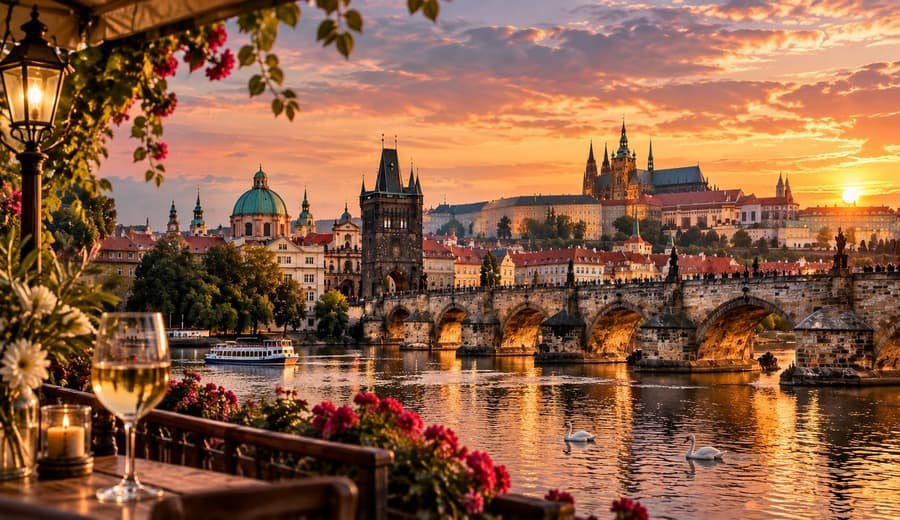
Prague is best at its own surface. The medieval core is the most visually spectacular thing in Central Europe, genuinely without equal, and it is at its best in the two hours after dawn. It is also the most crowded of the three by a wide margin, and the historic centre has been the most thoroughly converted into a visitor economy.
Budapest is best at being used. It has a bath culture nothing else in Europe matches, the best nightlife of the three, historic coffee houses that are still cafés rather than exhibits, and a river that does more work than the Vltava or the Danube in Vienna. It is the least polished and the most alive.
Where Budapest loses
Say it plainly.
Art. Vienna's museums are in a different league, and Budapest's National Gallery is a good national collection rather than a great international one.
Visual coherence. Prague's old town is more beautiful than anything in Budapest. Budapest's beauty is a nineteenth-century boulevard city — Andrássy, the river frontage, the Parliament — and it is grand rather than picturesque.
Compactness. Prague's core is walkable in a way Budapest's two-bank sprawl is not, which is why the two-day itinerary has to be so disciplined about crossings.
Where Budapest wins
The baths. There is no comparison, because neither of the other two has this at all. Széchenyi, Gellért and Rudas exist because the city sits on thermal springs, and it is the single thing you cannot substitute elsewhere.
Value. Budapest is meaningfully cheaper than Vienna and slightly cheaper than Prague on food and drink — the cost guide has the detail — while opera and concert tickets are dramatically cheaper than Vienna's.
Nightlife. The ruin bars are a real cultural form rather than a themed offering, and the District VII density has no equivalent in either city.
Twentieth-century history, told hard. The House of Terror, the Shoes on the Danube Bank, Memento Park and the 1956 sites make Budapest the place where the century is most directly confronted. Prague has this too; Vienna is quieter about its own.
If you are doing all three
Order matters. Go Prague → Vienna → Budapest.
The reason is not sentimental. Prague is the most immediately spectacular and the least rewarding to linger in, so it works as an opening. Vienna is the formal middle. Budapest is the one that improves as you relax into it, so it should be the end — and finishing a two-week Central European trip in a thermal bath is a better structure than starting in one.
Days. Three in Prague, three in Vienna, four or five in Budapest. If you have less, take the days from Prague first.
Getting between them. Vienna to Budapest is about two and a half hours by direct train, several times a day, and it is the easiest leg in Europe. Prague to Vienna is roughly four. Trains beat flying on all three legs once you count airport time. If you are driving instead, note that each country sells its own motorway vignette.
If you can only pick one
Pick Vienna if you are going for art, classical music and imperial history, and you do not mind paying for it.
Pick Prague if this is a short first trip to Central Europe and you want the highest visual return per day.
Pick Budapest if you want a city rather than a sight — if you would rather spend an evening in a bath and a late dinner than in a third museum, if the price difference matters, or if you are travelling with people who want different things from the same day.
That last point is the strongest practical case for Budapest: it is the one of the three that comfortably absorbs a group who do not agree. The couples guide, the family guide and the solo guide all describe genuinely different cities in the same place.
Where to stay nearby
Live prices and availability on a map centred on this exact spot — hotels, apartments and hostels, so you can judge the walk from here rather than guess from an address.
Bookings made through this map earn us a commission. Your price is unaffected.