The city
Reading Budapest: an era-by-era guide to what you are looking at
Tony Denesa – Travel Advisor9 min read
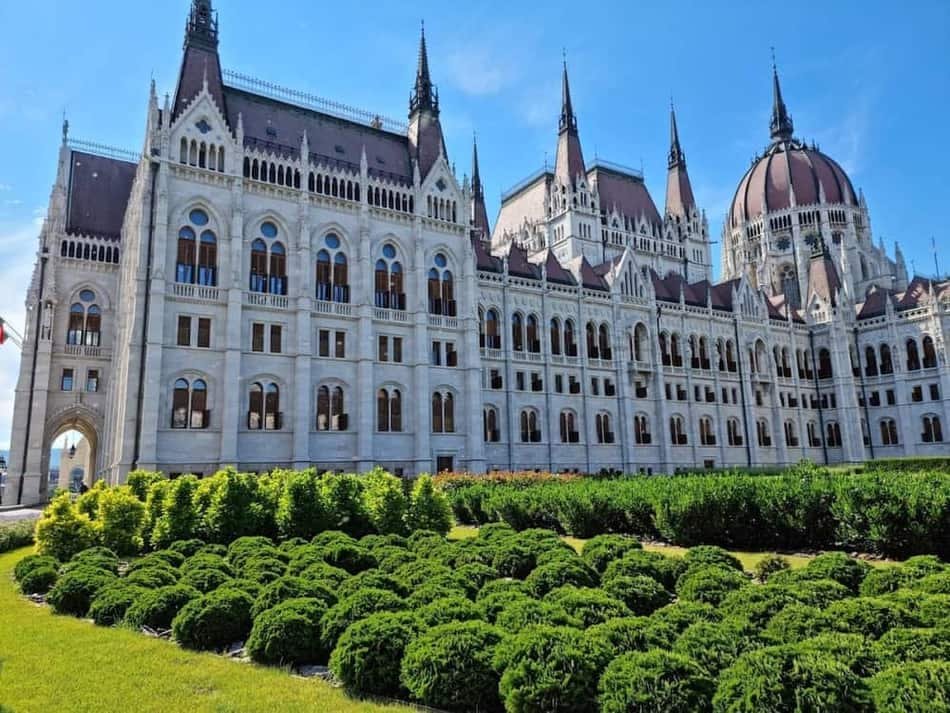
Budapest looks older than it is. The overwhelming majority of what a visitor photographs was built between roughly 1870 and 1914, in a single enormous burst, and understanding that one fact explains almost everything else about the city's appearance.
Why the burst happened
The 1867 Compromise turned the Habsburg empire into Austria-Hungary and gave Hungary control of its own internal affairs. Budapest became a real capital rather than a provincial town, and the money and ambition arrived at once.
Then came 1896: the millennium of the Magyar arrival in the Carpathian Basin. The city set itself a deadline and built against it — Heroes' Square, the M1 metro, Vajdahunyad Castle, the Museum of Fine Arts, and a great deal else, finished or begun for that anniversary.
Between 1870 and 1900 the population roughly tripled. Whole districts went up in a decade.
The layers, oldest first
Roman. Aquincum in Óbuda, and the amphitheatres. Second century, and a separate story with its own page.
Medieval. Very little survives above ground, because of the Ottoman century and the 1686 siege that ended it. What there is sits on Castle Hill: fragments of Gothic in doorways and cellars, and the core of Matthias Church under a nineteenth-century restoration so thorough that the building you see is largely Frigyes Schulek's idea of what it should have been.
Ottoman. The thermal baths — Rudas, Király, Veli Bej — and Gül Baba's tomb. Almost nothing else.
Baroque. The Habsburg rebuilding after 1686. Óbuda's main square, the Castle District's street facades, and a scatter of churches. Restrained rather than Viennese-exuberant, because it was provincial building on a war-damaged site.
Neoclassical. The early nineteenth century, before the boom. The Hungarian National Museum of 1847 is the type specimen: a columned portico, symmetry, a building that wants to look like a temple to civic virtue. This is the moment Pest starts to look like a capital.
The boom, which is most of the city
Historicism is the label, and it means exactly what it says: the architects of the boom borrowed a historical style per building, chosen to suit the building's purpose.
- Neo-Gothic for the Parliament, 1885–1904 — because Westminster had done it and Gothic read as parliamentary. It is the third-largest parliament building in the world and it has 691 rooms.
- Neo-Renaissance for the Opera House and the mansions along Andrássy Avenue, because the Renaissance read as cultured.
- Neo-Romanesque for the Fisherman's Bastion, 1902, which is not a fortification and never was — it is a viewing terrace in the costume of one.
- Neo-Classical–Renaissance hybrid for St Stephen's Basilica, which took over fifty years and had its dome collapse once en route.
The apartment blocks that fill District V, VI, VII and VIII are the same impulse at domestic scale: four to six storeys around an internal courtyard, with an open arcaded walkway on each floor. That courtyard type is the single most characteristic Budapest building, and it is the reason the ruin bars work — you can put a bar in a courtyard.
Art Nouveau, which is where it gets interesting
The generation after the historicists thought borrowing was the problem, and Ödön Lechner set out to invent a Hungarian architecture instead — folk motifs and Zsolnay ceramic rather than Italian orders.
It is the most distinctive thing in the city and it has its own article. The short list: the Museum of Applied Arts, the Postal Savings Bank, Szent László Church out in Kőbánya, and — the one you can experience rather than look at — Gellért Baths.
The twentieth century
Interwar modernism exists and is underrated: clean-lined apartment buildings across Újlipótváros, which is why that district feels different from its neighbours.
Socialist realism, then prefabricated housing estates. The *panel* blocks that ring the city — Újpalota, Havanna in Pestszentlőrinc, Kőbánya — house a large share of Budapest and are almost entirely absent from tourist accounts of it. Memento Park holds the statuary from this period.
Contemporary. The Museum of Ethnography and the House of Music, both recent additions to City Park, are the current answer — and the Liget Budapest project that produced them has been argued about at length.
A walk that shows you all of it
Start at the National Museum (neoclassical), walk to the Great Market Hall (iron-and-glass industrial), cross the Liberty Bridge to Gellért (Art Nouveau, and go in). Come back over to the Basilica, up Andrássy past the Opera (neo-Renaissance) to Heroes' Square (millennial), then the Museum of Ethnography behind it (2022).
Four hours, one line across the city, and about eight hundred years of building.
Where to stay nearby
Live prices and availability on a map centred on this exact spot — hotels, apartments and hostels, so you can judge the walk from here rather than guess from an address.
Bookings made through this map earn us a commission. Your price is unaffected.