Blog
Budapest beyond the centre: six outer districts worth the journey
Tony Denesa – Travel Advisor9 min read
Almost every visitor to Budapest sees five districts out of twenty-three, which is a reasonable use of three days. But the city's administrative boundary contains a lot more than the tourist map, and a handful of the outer districts hold things that exist nowhere in the centre.
This is not a list of hidden gems. Several of Budapest's outer districts are genuinely residential and have nothing for a visitor, and it would be dishonest to pretend otherwise. These six do.
Budafok — a hundred kilometres of cellars
District XXII, at the southern end of the Buda side, is the only part of Budapest with a wine industry of its own.
Limestone was quarried here for centuries to build the city. The emptied tunnels hold a constant twelve degrees, which turns out to be close to ideal for storing wine, and estimates of the total network run past a hundred kilometres.
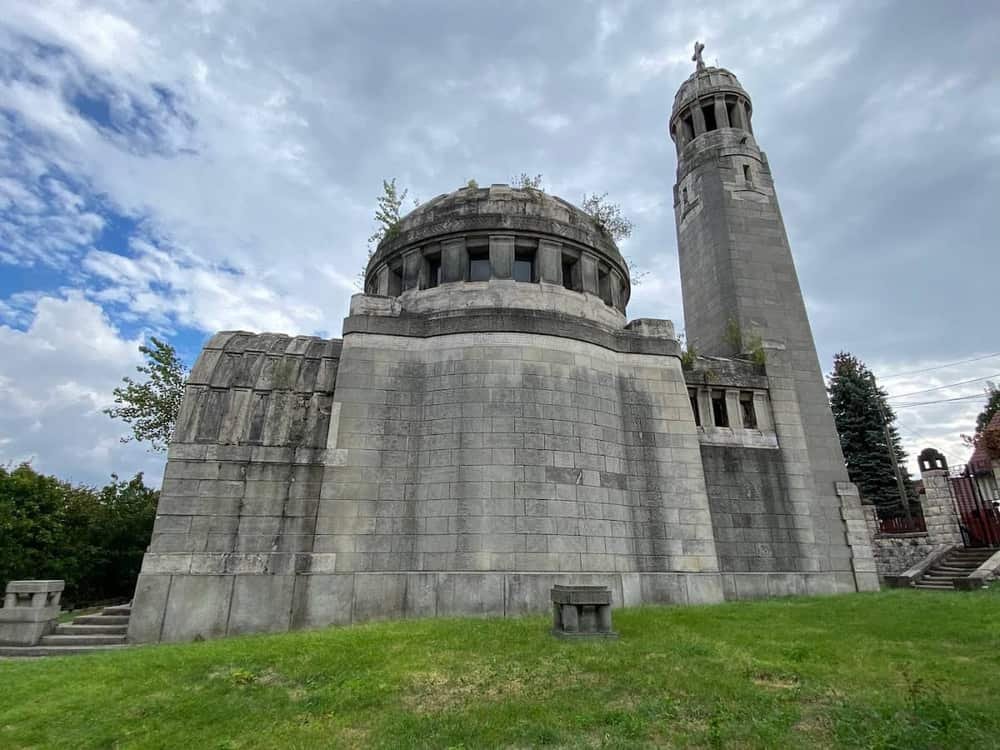
The Törley story is the anchor. József Törley learned the méthode champenoise in Reims and came home in 1882 to make sparkling wine in these cellars; the company still operates, and the mansion and family mausoleum above the cellars are the district's landmarks.
There are also cave dwellings — not a metaphor, but rooms cut into the cliff face that families lived in until the 1960s — and the Baroque Nagytétény Castle Museum at the far southern end.
The catch: cellar visits are almost always by appointment. Turning up on spec generally gets you a locked gate.
Kőbánya — Lechner, and Plot 301
District X means "stone quarry", which is what it was, and the emptied galleries beneath it became the cellars of a major brewing industry after Anton Dreher bought in during 1854.
Two things bring you here.
Szent László Church, 1897, is one of Ödön Lechner's finest buildings and is far less visited than his Museum of Applied Arts — a tower and roof in patterned Zsolnay ceramic, folk motifs where any other church would have plain stone. Free, and covered properly in the Art Nouveau piece.
Plot 301 in the New Public Cemetery is where Imre Nagy and those executed after the 1956 revolution were buried in unmarked graves, several face-down, at the far edge of the ground. They were exhumed and reburied with honours in June 1989 at a ceremony that drew a quarter of a million people — generally read as the moment Hungarian communism lost the argument.
Allow time: it is a long walk inside a very large cemetery, and it is a burial ground rather than a sight.
Hegyvidék — the hills, and three historic railways
District XII is where the city runs out into beech forest, and it contains the highest ground in Budapest.
Normafa is the ridge the city walks on at weekends, with strudel stalls that have been there for generations. Elizabeth Lookout on János Hill, at 527 metres, is by Frigyes Schulek — the architect of the Fisherman's Bastion, and it shows.
The way up is the point: a cogwheel railway running since 1874 and covered by a normal transport ticket; the Children's Railway, staffed almost entirely by ten to fourteen-year-olds; and the Libegő chairlift back down over the treetops.
It is four or five degrees cooler than the centre, which matters enormously in summer, and it is the best thing in the city for travelling with children.
Kispest — a garden city from 1908
District XIX would be unremarkable except that it contains the Wekerle Estate, one of the best-preserved garden cities anywhere in Europe.
Built from 1908 for working families — clerks, railwaymen, factory workers — at a density low enough that every house had a garden. Around twenty thousand people were meant to live here, and roughly that many still do.
The reason to come is Kós Károly tér, the central square, designed by Károly Kós in a deliberately Transylvanian folk idiom: steep shingled roofs, carved timber gateways, towers that look transplanted from a Székely village. Walking through one of those wooden gates into the square is genuinely startling, because nothing in the approach prepares you.
It is free, it is a functioning neighbourhood rather than a museum, and there is nothing to do but look — which is the whole proposition.
Óbuda — the Roman one
District III is the oldest of the three towns that merged into Budapest in 1873, and the only one with a Roman city underneath it.
Aquincum was the capital of the province of Pannonia Inferior, with a garrison, an amphitheatre and around thirty thousand people. The museum sits on the excavated site with a reconstructed street.
Above ground, Óbuda has a Baroque main square that feels like a country town, and the Római Strandfürdő — an open-air bath shaded by old trees, cheaper and far more local than anything in the centre.
Csepel — industry, and 1956 from the factory floor
District XXI, on the northern tip of Csepel Island, meant one thing for most of the twentieth century: the Csepel Works, founded by Manfréd Weiss in 1892 and grown into the largest industrial site in Hungary.
In October 1956 the Csepel workers' councils were among the most determined centres of the revolution and among the last to stop striking after the Soviet tanks returned. If you have read about 1956 and want the part of the story that happened outside the centre, this is where it is.
The Kis-Duna, the quiet Danube side-arm on the eastern edge, is where the district actually goes at weekends — still water, marinas, fishermen.
What to skip, honestly
The remaining outer districts — Rákosmente, Pesterzsébet, Soroksár, Rákospalota, Mátyásföld, Pestszentlőrinc — are residential, and for a visitor on a short trip they are simply somewhere people live. Soroksár has a botanical garden and a good stretch of river in summer, and Újpest has a proper market at the end of the M3, but neither justifies a special journey.
All twenty-four are on the districts index if you want to see for yourself.
How to fit one in
Pick one and give it a half-day, ideally on a second visit. Budafok on a morning with a cellar booked. Hegyvidék on a hot afternoon. Kispest for an hour if you care about architecture.
The mistake would be to trade the centre for these on a first trip of three days. The three-day guide is the right shape for that, and this is what comes after it.
Where to stay nearby
Live prices and availability on a map centred on this exact spot — hotels, apartments and hostels, so you can judge the walk from here rather than guess from an address.
Bookings made through this map earn us a commission. Your price is unaffected.