Guides
The Danube Bend: Szentendre, Visegrád and Esztergom in one day
Tony Denesa – Travel Advisor10 min read
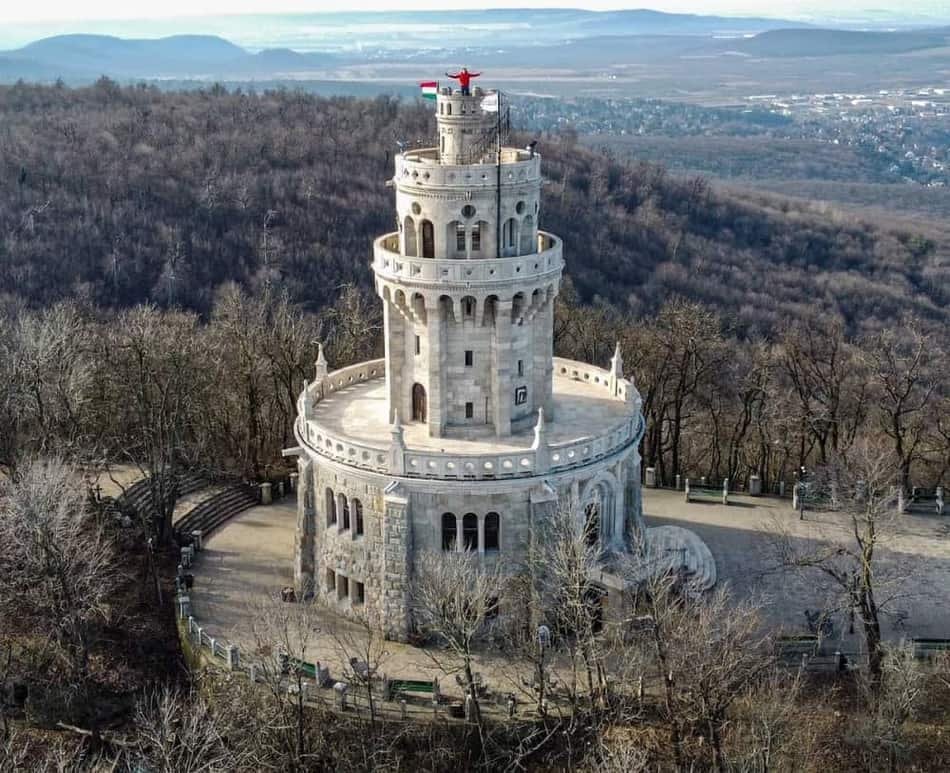
Forty kilometres north of Budapest the Danube hits the Visegrád hills, turns sharply south, and cuts a gorge between them. The three towns along that bend — Szentendre, Visegrád and Esztergom — are the best day out from the city, and doing all three in one day is entirely possible if you plan it in the right direction.
Most people do not. They start at Szentendre because it is closest, spend three hours there, and run out of afternoon before Esztergom.
Do it backwards
Go to the far end first. Take the train or a tour bus straight to Esztergom, work back down the bend, and finish at Szentendre — which is the closest to Budapest, has the most restaurants, and is the pleasant place to be at six in the evening. It is the same logic as the one-day city route: follow one line, never double back.
That single reordering is the difference between seeing three towns and seeing one and a half.
Esztergom
Hungary's religious capital and the seat of its primate. The basilica is the largest church in the country — a vast neoclassical dome visible from far down the river, sitting on the hill where Stephen I, the first Christian king, was crowned around the year 1000.
Two things inside are worth the climb: the Bakócz Chapel, red marble Renaissance work from 1507 that was dismantled and reassembled inside the newer building, and the cupola, which you can climb for the best view of the bend.
The Danube here is the Slovak border. The Mária Valéria Bridge crosses to Štúrovo, and you can walk into another country and back before lunch.
Visegrád
The middle of the bend, and the one with the view everybody photographs.
The citadel sits on a hill above the river at the sharpest point of the turn, and the panorama from it — the Danube bending back on itself between wooded hills — is the image the whole region is sold on. There is a bus up from the town, or a steep walk.
Below it, the ruins of the royal palace were a fourteenth-century seat of the Hungarian kings and were substantially rebuilt from excavation. In summer there are jousting tournaments, which are exactly as touristic as they sound and are enjoyed by children.
Szentendre
The artists' town, twenty kilometres from Budapest, and the one you finish in.
A Serbian Orthodox community settled here in the seventeenth and eighteenth centuries, fleeing the Ottoman advance, and built the churches that give the town its Balkan skyline. From the early twentieth century it became an artists' colony, and it has been trading on both ever since.
It is pretty, it is genuinely worth seeing, and it is also the most commercialised place in this article — the main square is marzipan museums and souvenir shops. Walk two streets uphill and it becomes a quiet Baroque town again.
The Hungarian Open Air Museum (Skanzen) on the edge of town is the serious attraction: relocated village architecture from across the country, arranged by region, on a very large site. It needs half a day on its own, so treat it as an alternative to the three-town run rather than an addition.
Getting there
By organised tour is the simplest way to do all three in a day, because the connections between Visegrád and Esztergom are the weak link on public transport. A tour also usually includes the boat leg, which is worth having.
By train, Esztergom runs from Nyugati station in about ninety minutes. Szentendre is on the HÉV suburban line from Batthyány tér, forty minutes, and a normal transport ticket plus a supplement covers it.
By car is the most flexible — about 120 km round trip on the loop. The driving guide covers the vignette, the border and the parking, and the Danube article explains why the river turns here at all.
By boat is the slow pleasure. Scheduled services run up the bend in the warmer months, take considerably longer than the train, and are the best way to arrive at Visegrád — the citadel appears above you as you round the turn.
Which one, if you only have half a day
Szentendre. Forty minutes each way on the HÉV, and the town is small enough to see properly in three hours.
Esztergom if the basilica is the draw and you do not mind the ninety-minute train.
Visegrád alone is the weakest choice — the citadel is the point, and it is a long way for one view.
Practical
- Mondays close a lot of things in all three towns, including most museums.
- Esztergom's basilica cupola closes in bad weather and in winter.
- Szentendre is very busy on summer weekends. Go on a weekday if you can.
- Bring cash for the smaller places; card coverage is good but not universal outside Budapest.
If you would rather stay in the city, the beyond-the-centre piece covers the outer districts, several of which are more interesting than they sound.
Why the bend is there at all
The geology is the reason the scenery works, and it takes one paragraph.
The Danube runs east across the plain, meets the hard volcanic rock of the Visegrád and Börzsöny hills, and cannot cut through it — so it turns south. The gorge it carved between the two ranges is the bend, and the reason every hilltop along it has a fortress on it: whoever held the turn controlled river traffic between Vienna and the Black Sea.
That is also why Esztergom was the first Hungarian capital and why Visegrád was a royal seat. The bend was the strategic point of the kingdom long before Budapest existed as anything but a Roman garrison town downstream.
What to eat there
Szentendre has the most choice and the highest prices — the main square is priced for coach parties. Walk uphill for the Serbian and Hungarian places the residents use.
The regional speciality worth ordering anywhere along the bend is halászlé, the paprika river-fish soup, which is a Danube dish and is better here than in the city. The Hungarian cuisine piece covers what else is worth ordering.
Esztergom and Visegrád are both quieter and cheaper. Neither has a restaurant scene worth planning around, so eat where you happen to be when you are hungry.
Where to stay nearby
Live prices and availability on a map centred on this exact spot — hotels, apartments and hostels, so you can judge the walk from here rather than guess from an address.
Bookings made through this map earn us a commission. Your price is unaffected.